This guide explains how Aquila is used as a modern reference point for selecting reliable solutions, evaluating specifications, and matching needs to real-world constraints. Background details cover the meaning and typical role of “Aquila” across product and research contexts, emphasizing objective criteria such as design, documentation, and operational fit.

When people search for Aquila, they are usually trying to identify a dependable solution—whether that term appears as a product name, a project codename, or a technical reference in a sector-specific context. This guide focuses on practical, objective decision-making: how to evaluate Aquila-related options, what technical signals to verify, and how to ensure the chosen configuration aligns with your operational needs, documentation expectations, and safety requirements.
Instead of relying on assumptions or marketing phrasing, an industry-style approach treats “Aquila” as a label that must be validated: confirm provenance, inspect specifications, clarify compatibility, and ensure the supplier’s documentation matches the claimed use case.
To keep the evaluation rigorous, you’ll notice repeated emphasis on traceability: the requirement is not merely to pick “the Aquila thing,” but to choose the correct Aquila reference (including version/revision/configuration), ensure it is supported in your environment, and confirm that the documentation package is consistent with the deliverable you will receive.
Aquila commonly functions as a shorthand identifier that appears across different inventories and documentation systems. In some cases it is a named device or platform; in others, it is a code used within research, engineering, or logistics. Regardless of the exact context, the decision principles are the same: buyers need traceable details, repeatable performance, and clear terms for support, maintenance, and lifecycle handling.
From an expert procurement and systems perspective, the real value is not the word “Aquila” itself—it is the package of verifiable facts behind it. Those facts typically include:
Because “Aquila” can refer to multiple domain objects, the procurement process must treat it like a variable, not a constant. Two vendors may both claim “Aquila compatibility,” but the term might map to different versions, firmware builds, mechanical variants, electrical ratings, network interfaces, or service kits. A rigorous evaluation therefore starts with identification: what exactly is being quoted, and what exactly will arrive?
In practical terms, “Aquila” matters because it is where uncertainty often hides. When the item name is shared or reused in multiple contexts, buyers experience misalignment risks: incorrect accessories bundled, mismatched software components, unclear service readiness, missing compliance documentation, or a setup that works in a lab but fails in the field. The evaluation strategy you use should be designed to expose these uncertainties before you place the order.
To evaluate Aquila reliably, you want to reduce ambiguity. The questions below are framed like an industry reviewer’s checklist, with emphasis on evidence, version control, and deployability.
Look for documentation that is complete and internally consistent. If an Aquila listing or proposal mentions performance targets, verify whether those targets are defined with test conditions (environment, sample size, measurement method). In technical procurement, “what” matters—but “under which conditions” often decides whether a spec is usable.
Internal consistency means more than “the document looks professional.” You want to see that part numbers, revision identifiers, wiring diagrams, configuration tables, and stated limits agree across sections. For example:
When documentation is inconsistent, that inconsistency is often a proxy for implementation risk. Even when the hardware is capable, incomplete or mismatched documentation leads to installation errors, unsupported configurations, and delays during commissioning. Therefore, documentation quality should be treated as a deliverable, not just as an informational resource.
Aquila offerings may differ by configuration. Ask for part-level or version-level details. If the supplier cannot specify which exact configuration is being quoted, you are not comparing like-for-like.
Configuration clarity should be pursued using identifiers that are difficult to misunderstand. Depending on the domain, that might include:
In procurement practice, you should request the supplier to provide a “configuration snapshot” showing exactly what will be shipped and how it maps to the documents you will receive. This snapshot becomes an anchor for acceptance testing and prevents later disputes (“that’s not the same Aquila we quoted”).
Even when a solution is technically sound, it may fail in deployment due to mismatch. Confirm installation needs, required interfaces, training expectations, calibration steps, and operating boundaries (temperature, vibration, humidity, duty cycle, or other relevant factors depending on the domain).
Integration constraints often appear in “small” details that are easy to overlook in an initial review. For instance, the Aquila system might require:
From an evidence-based stance, these constraints should be explicitly documented. If the supplier cannot describe the integration pathway in a structured way, your project risks creeping scope: you may discover later that you need additional engineering time, new accessories, or an alternative installation method.
Prefer suppliers who can explain their support workflow clearly: diagnostics process, response times, spare-part strategy, and warranty boundaries. This is where “Aquila” becomes practical—your uptime depends on service responsiveness and documentation accuracy.
Support readiness is not merely “they offer a warranty.” You want to know:
An evidence-based evaluation also considers whether the supplier’s support documentation exists and matches the product configuration. If the supplier uses one set of troubleshooting steps for a different revision, your team will waste time following incorrect procedures.
An expert approach matches requirements to features, rather than matching curiosity to a name. Use a structured framework that forces trade-offs into the open. A typical framework looks like this:
This approach applies to any Aquila reference you encounter—whether it is a technical product, a component, or a project-based system identifier.
To make the framework even more objective, you can add “evaluation outputs” to each step. For example:
This turns the selection process into a repeatable method that produces decisions you can explain to stakeholders and auditors.
“Aquila” is also widely known as a word connected to the Latin term for an eagle and appears in multiple naming conventions across science, engineering, and branding. As a result, “Aquila” can show up in different domains with different meanings. For the objective evaluator, the key is to treat each use case as domain-specific: confirm what the term refers to in the specific catalogue, spec sheet, or technical proposal you are reviewing.
In practice, this means you should not assume that every Aquila reference implies the same architecture or performance characteristics. The correct interpretation is the one supported by the documentation attached to the particular item or project.
It also means you should be cautious about “re-labeling.” Some vendors reuse the same family name while changing internal architecture. Others might use “Aquila” as a project codename that groups multiple variants under a single umbrella. Therefore, you should treat the “Aquila” name as an index into documents rather than the content of the specification itself.
If you are working across multiple teams—procurement, engineering, compliance, and operations—ensure everyone shares the same definition of “Aquila” for the procurement cycle. A practical technique is to create a procurement record that includes:
This record reduces miscommunication and helps prevent the common situation where procurement believes it bought one configuration but engineering commissioning tests reveals another.
Even when the technical core is correct, mismatches can happen due to local realities: installation environment, service availability, compliance expectations, and supply chain lead times. In regions where infrastructure and procurement timelines vary, buyers often benefit from asking suppliers how Aquila-related items are handled locally—especially regarding distribution, documentation language, training, and maintenance access.
If you are sourcing from a supplier operating “nearby” (or within your broader distribution region), ask for concrete details on:
Location considerations also include compliance and language. If your organization requires documentation in a particular language, or if you need local regulatory alignment, verify those requirements at the time of quotation. A supplier might provide an English manual but omit the local safety labels or installation guidance required by your environment.
Additionally, consider whether local electrical standards, network security policies, or infrastructure constraints impact installation. Even a strong “global” specification might not cover local variations (for example, differences in grounding, cable standards, or network segmentation policies). Therefore, incorporate local engineering review into due diligence.
You did not provide explicit price numbers, and it would be inappropriate to invent figures. Instead, the very useful expert guidance is to explain how Aquila pricing should be interpreted. In very technical procurement categories, price is not only the purchase cost; it is the total cost of ownership that includes documentation, installation effort, calibration, consumables (if applicable), service, and downtime risk.
To evaluate Aquila-related cost proposals objectively, compare:
If a quotation is missing these categories, “cheap” can quickly become expensive. Conversely, the highest priced option is not automatically correct—validate whether it reduces risk in your particular scenario.
To reduce pricing disputes, ask the supplier to separate line items into: hardware, software/licenses, commissioning assistance, training, documentation, and optional service contracts. When those categories are lumped together, it becomes difficult to compare scope. A more transparent scope also helps you forecast future costs, especially when maintenance requires specific calibration intervals or spare part replacements.
When evaluating cost, you may also want to estimate indirect costs such as:
This does not require you to become an actuary. Even simple risk categorization (low/medium/high) can improve decision quality.
| Evaluation area | What you should require (conditions/requirements) | Decision trigger (when to proceed or pause) |
|---|---|---|
| Documentation | Versioned manuals/spec sheets, defined test conditions, clear installation and safety notes. | Proceed only if Aquila materials match the exact quoted configuration and include test context. |
| Compatibility | Interface and integration details (inputs/outputs, software/hardware dependencies, constraints). | Pause if the supplier cannot state integration requirements up front. |
| Operational fit | Stated operating boundaries relevant to your environment and duty cycle. | Proceed only if boundaries align with your deployment conditions (not just lab defaults). |
| Quality and safety evidence | Compliance statements and testing summaries appropriate to the domain. | Pause if evidence is absent where safety or reliability claims are made. |
| Supplier support | Service pathway, spare parts policy, diagnostic approach, warranty boundaries. | Proceed only if support coverage is clear and practical for your timeline. |
| Total cost of ownership | Transparent breakdown of installation, support, spares, and expected lifecycle items. | Proceed only if you can compare options on equal scope—not just on upfront price. |
The following procedure is designed to be usable by technical managers, procurement teams, and project leads evaluating an Aquila-related item or system reference. It emphasizes traceability and testable assumptions.
Request the exact item identifier, version, and functional description. Confirm whether it is a product, a platform, or a project name. This step eliminates confusion caused by the term’s broad usage.
To strengthen this step, you can require the supplier to answer three questions in writing:
When suppliers provide concise answers, it usually indicates mature documentation and fewer hidden variants.
Ask for the latest manual/spec sheet, a configuration document (if applicable), and any compliance/testing summaries relevant to your use case. Ensure documents correspond to the exact quote.
Documentation packets often fail because they are incomplete. A robust request list may include:
Also request a clarification on any “pre-requisites” for installation. For example, the Aquila system might require a particular cable type, a configuration tool version, or installation training. Those prerequisites should be stated, not left for the commissioning team to discover under time pressure.
Translate your operational needs into measurable requirements. Then match them to what the Aquila documentation actually specifies.
It’s helpful to separate “requirement” from “interpretation.” For each requirement, define:
For example, if a requirement concerns stability or performance, you want to know the duration over which the stated performance holds, the measurement sampling rate, and whether the values apply before or after a warm-up period. Many procurement disputes stem from performance that is time- or condition-dependent.
When mapping, insist on citations: reference the specific document sections or tables that support each feature claim. This builds an evidence trail that can be reviewed later by auditors, internal quality teams, or engineering leads.
Confirm physical setup, interface connections, software dependencies, and training needs. Where integration risk exists, request a written installation or deployment plan.
Integration validation should cover both “technical” and “organizational” readiness. Technical readiness includes compatibility and interface correctness; organizational readiness includes who is trained to install, configure, and diagnose the system.
Practical integration topics to verify include:
Where applicable, request an installation checklist and a commissioning script. If the supplier can provide a repeatable script, your team can execute it consistently across multiple sites or deployments.
Before full commitment, verify performance in conditions that approximate your deployment environment. Capture results and compare them to the stated test conditions from the Aquila documentation.
Pilots should not be vague. Define what constitutes success for each acceptance criterion. Typical pilot deliverables include:
Importantly, compare pilot outcomes to the documentation’s test context. A common error is to compare performance values without verifying whether the test conditions match your environment. An evidence-based pilot checks both performance and conditions.
If a pilot fails or underperforms, you need a structured remediation path. Document whether remediation would involve configuration changes, additional components, updated software versions, or changes to operating conditions. Avoid “hope-based” remedies that cannot be validated.
Ask how service requests are processed, what spares are stocked, and how the supplier handles repairs or upgrades. A clear support pathway is often the difference between stable operations and recurring disruptions.
Lifecycle handling should address more than warranty terms. Consider:
Also confirm whether support tools (software utilities, diagnostic adapters, firmware images) are provided to your team or are accessible only via the supplier. If tools are not accessible, maintenance may become dependent on external visits, increasing downtime and cost.
Use the procurement scope checklist to ensure comparisons are equitable. Document what is included, what is excluded, and what might change during the lifecycle.
A cost-of-ownership view is not just a financial comparison—it is a risk and operations plan. A more complete decision record may include:
When you finalize the decision, ensure contractual documents (purchase order, service agreement) reflect the scope and obligations that you validated during due diligence. A common failure pattern in procurement is that the quote includes a capability you validated, but the final contract omits it. Your evidence-based process should therefore connect validation to contractual scope.
For decision-making standards and reliability-minded procurement practices, consult generally recognized guidance from established organizations. Examples include ISO standards covering management systems and risk considerations (e.g., ISO/IEC frameworks related to management and service processes) and top-practice material from major industry bodies that emphasize documentation traceability and verification. When you implement Aquila-related selections, prefer references that define how to verify claims under stated conditions rather than relying on vendor marketing statements.
Because the exact domain for “Aquila” is not specified, this guide keeps references category-neutral. Still, the key idea remains: choose frameworks that support structured evidence, risk assessment, controlled documentation, and validated processes.
In practical terms, that might mean aligning your evaluation with concepts such as:
When you use these frameworks, your Aquila procurement becomes less dependent on individual opinions and more dependent on reproducible criteria. This reduces the chance of late project surprises and strengthens accountability.
Note: Because your prompt did not specify a particular industry for “Aquila,” this article keeps the guidance category-neutral and avoids domain-specific claims or performance numbers that could be misleading.
In practice, Aquila is often a name or identifier tied to a specific product, project, or platform. Because it can be used in multiple domains, you should confirm the exact item identifier and documentation associated with the specific Aquila listing you are evaluating.
Procurement teams sometimes encounter Aquila in different forms: a SKU, a model family, a subsystem name inside a larger solution, or a software branch name. The consistent rule is to avoid assuming meaning. Treat the identifier as a pointer to specifications and deliverables.
Ask for versioned documents (manual/spec/configuration notes) tied to the exact quoted identifier. Cross-check part numbers, revision levels, and feature sets against what the supplier provides in the documentation packet.
To make this verification more robust, you can also request:
Then, during acceptance or commissioning, ensure your team confirms these same identifiers on the received unit. Evidence-based procurement closes the loop between “what was quoted,” “what was delivered,” and “what was tested.”
No. Expert evaluations focus on total cost of ownership: installation effort, support coverage, spares strategy, documentation deliverables, and the operational risk of mismatches with your environment. Upfront price can be misleading without scope clarity.
Two quotes might look similar on hardware cost but differ dramatically in support terms, documentation completeness, training inclusion, or required integration work. If one option requires significant internal engineering to compensate for missing documentation or integration tooling, the “cheap” choice can inflate total cost quickly.
Typical failure causes include missing or unclear integration requirements, operating outside stated boundaries, incomplete documentation packages, and insufficient support readiness (for example, unclear diagnostics or spare parts availability).
Other frequent issues in real deployments include:
Most of these failure causes become detectable if the evaluation process includes configuration clarity, evidence-based documentation checks, and a pilot or proof stage where possible.
Where feasible, run a proof or pilot in conditions aligned with your deployment. Use the documentation’s test context as a benchmark, and capture results to verify that real performance matches expectations.
Risk reduction is strengthened when you also validate “operational readiness.” That means confirming not only whether the Aquila item works once, but whether your team can:
Operational readiness tests prevent a common pattern: the system “works” in the pilot but operational problems (maintenance complexity, lack of spare availability, unclear update procedures) surface later.
Ask about service workflow, spare parts availability, warranty boundaries, installation and training expectations, and whether they can provide evidence-based documentation that matches your quoted Aquila configuration.
To make your supplier interactions more productive, you can use a structured question set:
When suppliers respond with specifics and references to documentation, it indicates a more mature support and quality process—an important signal for evidence-based procurement.
Aquila may appear as a product name, project reference, or technical identifier across different contexts. The very reliable way to approach it is to treat it as a starting point for due diligence: confirm what it is, validate the documentation and configuration, match it to operational constraints, and ensure a realistic support pathway. With that evidence-based workflow, your decision becomes repeatable, transparent, and aligned with real-world performance rather than generic claims.
In other words: the safest path is not “choose the Aquila that sounds right,” but “choose the Aquila that you can define precisely, verify systematically, and support operationally.” When you follow that approach, even when “Aquila” is ambiguous as a name, it becomes unambiguous as a deliverable—because the documentation, configuration, integration constraints, and acceptance evidence make it real.
A Guide to Cost-Efficient Small Electric Cars for Seniors

Mastering Debt Consolidation: Boost Your Credit Score and Manage Interest Rates

Your Guide to Loans, Credit Checks, and Interest Rates

Affordable Independent Living: Finding the Right Senior Housing

Guide to Senior Living Apartments: Affordable and Comfortable Environments

Leasing a Car: Expert Tips for Your Next Vehicle

Maintaining Oral Health After Tooth Loss with Dental Implants

Maintaining Oral Health with Dental Implants for the Elderly

Understanding 44539991272 and Supplier Sourcing


Understanding Supplier Quote Number 44539991272
This guide explains how to interpret supplier quotation reference 44539991272 and integrate related identifiers (e.g., 44539991272) into procurement decisions. It offers objective background on how such reference numbers function in sourcing workflows, then provides expert evaluation criteria, practical checks, and requirements commonly used in vendor negotiations and order confirmations.

Understanding Procurement Reference Code 44539991272
This guide explains how to interpret and responsibly use the procurement reference code “44539991272” in purchasing workflows, including supplier identification and pricing context. Objectively, procurement codes support traceability across orders, invoices, and audits. You’ll find a structured comparison of handling conditions, a step-by-step workflow, and practical FAQs focused on governance, accuracy, and documentation.
Understanding Receberecebe and Receiving Workflows
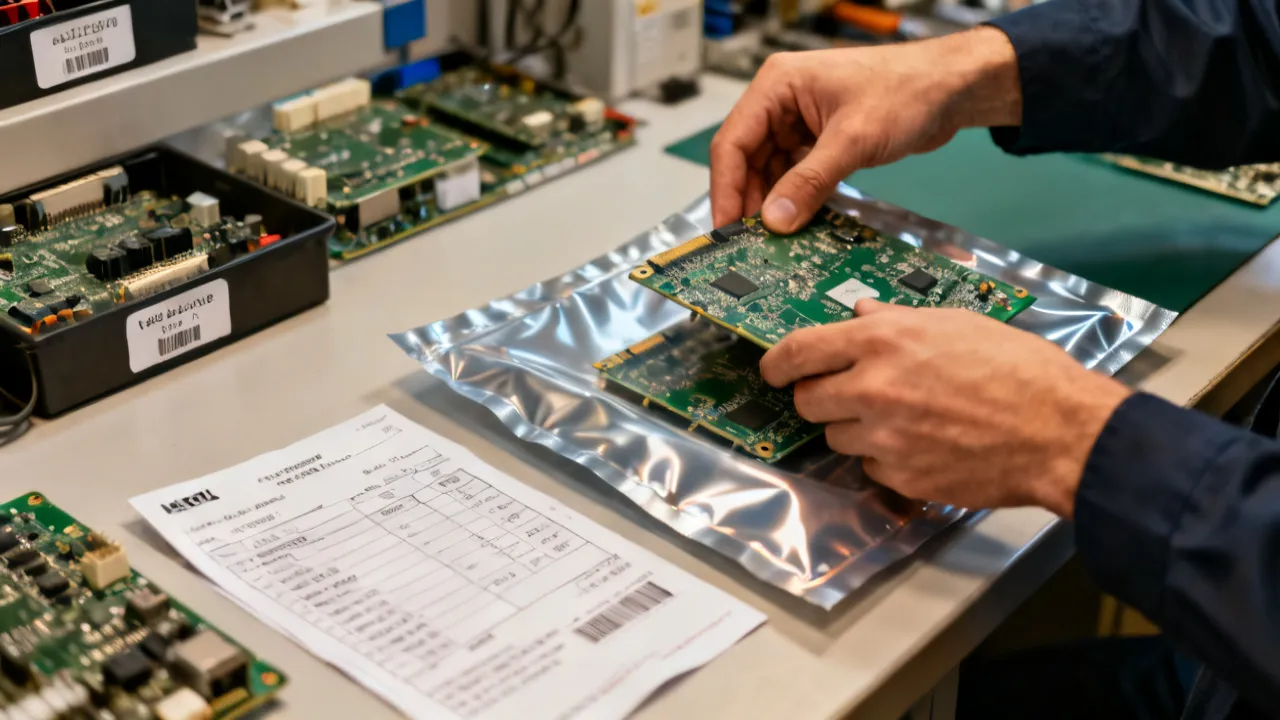
This guide clarifies “receberecebe” and the broader idea of “receiving,” explaining how organizations structure handoffs, documentation, and checks. It also provides objective context on why reception and intake processes matter in operations. The article then compares practical options, outlines step-by-step conditions, and answers common FAQs.

Understanding “receiverecebe” in Supply and Support
This guide explains how “receiverecebe” works in real-world procurement and customer support workflows, with practical conditions for reliable handoffs. The background clarifies how “receive” concepts connect to operational reliability, documentation, and service-level expectations, helping teams reduce errors and improve traceability without speculative claims or unverified performance figures.

Understanding “Receberecebe” and Receiving Workflows
This guide explains how “receberecebe” relates to receiving workflows and why “receberecebe” can impact accuracy, timing, and compliance. Objectively, the terms appear to reference repeated or layered receiving actions in operations. Understanding the underlying receiving process helps teams define roles, reduce errors, and align documentation.
Understanding Xi and Related Concepts in Systems
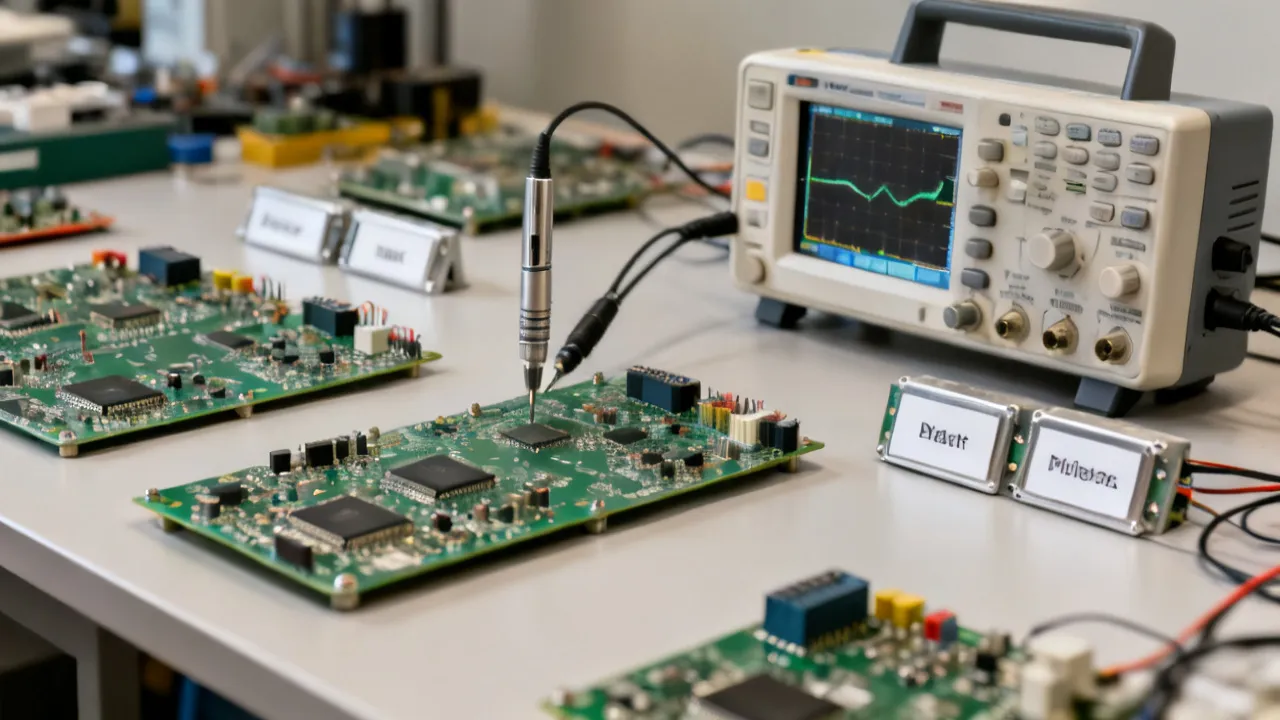
This guide explains how “Xi” is used in technical discourse and why it matters for system integration and signal-related workflows. Objectively, Xi often appears as a variable or symbol in mathematical and engineering contexts, while “Xi” can also be referenced in shorthand for component identifiers, indexing, or model parameters. Readers will gain context, practical evaluation steps, and clear requirements.
