This guide explains how to evaluate 41243498234 in real procurement scenarios, from verifying suppliers to interpreting price signals and ensuring fit-for-purpose sourcing. It objectively describes what such identifiers typically represent in commercial systems, how procurement teams validate documentation, and what due diligence steps reduce delivery and compliance risks.

When an internal or product identifier like 41243498234 appears in procurement communications, the priority is to treat it as a traceable reference—not a marketing claim, not a vague “reference number,” and not an assumption that the item it points to is obvious. In practice, you want to confirm what the number maps to (item, SKU, batch, specification set, or service code), then assess supplier reliability, price consistency, and delivery conditions. This guide walks through those steps in an objective, industry-minded way, helping you make sourcing decisions that stand up to audit and operational scrutiny, particularly for transactions handled nearby.
Even though the identifier itself is a simple string of digits, it tends to sit at the center of multiple business systems: the vendor quotation system, your purchasing/ERP system, your warehouse receiving workflow, your quality management records, and sometimes your finance and audit archive. If the meaning of 41243498234 is not verified early, downstream teams often spend days—or weeks—reconciling mismatches between documents, receiving records, and the goods actually shipped. A disciplined procurement approach makes that reconciliation unnecessary.
Identifiers such as 41243498234 are commonly used to connect documents across procurement workflows—quotes, purchase orders, packing lists, invoices, and sometimes quality records. While the exact meaning depends on the organization, the number generally serves one or more purposes:
Because identifiers can be system-specific, your first task is always to request the documentation that defines the item behind 41243498234. A credible supplier can typically provide a product description, specification sheet, and the terms that match the quotation. If the supplier cannot connect the identifier to a stable definition, that is an early warning signal. In a well-managed supply chain, an item reference should not be “locally understood” only by one person or one department; it should be reproducible from the supplier’s own internal master data.
Verification matters for several reasons that show up repeatedly in operational reality:
Price signals are rarely “just price.” For an identifier like 41243498234, price may reflect constraints such as lead time, minimum order quantities, packaging configuration, compliance requirements, or logistics scope. A professional procurement approach is to break the price into components so you can evaluate it for fairness, comparability, and operational suitability.
A buyer should treat price as a bundle of business terms that includes responsibility boundaries. The headline unit price is only one slice of the total commercial picture. When you evaluate a quote, ask: “What are we actually buying, under what standard, delivered how, and paid when?”
From an industry expert standpoint, the strongest quotes are those that are “auditable”: they show what you are buying, at what standard, under what shipping and acceptance criteria. If the quote is only a number with no itemization, procurement should request an itemized commercial offer and align it to 41243498234 as the anchor reference.
It is also useful to compare the quote to historical performance for the same identifier. If you previously purchased an item mapped to 41243498234, check whether the spec version changed, whether packaging changed, whether the price increased due to lead time, and whether the delivery terms shifted. If none of those variables changed but the price increased significantly, ask for justification in writing.
In sourcing, supplier evaluation is the difference between “obtaining” and “operating.” For any order tied to 41243498234, procurement teams typically confirm more than just contact information. They confirm the supplier’s ability to deliver consistent product definitions and consistent paperwork.
Even when purchasing is handled nearby, due diligence remains essential. Local sourcing can reduce transit risk, but it does not eliminate documentation mismatches, specification drift, or acceptance disputes. In fact, disputes in local supply chains sometimes become more frequent when coordination shortcuts are taken (“we can sort it out quickly”) rather than using formal acceptance criteria and written nonconformance procedures.
There are practical due diligence signals you can use without overcomplicating the process:
When supplier coverage is described as nearby, buyers often pursue faster turnaround and clearer coordination. Operationally, this can offer advantages such as reduced transit time, easier scheduling for receiving and inspection, and easier escalation when issues arise. However, you still need a disciplined process because “nearby” impacts logistics, not specification definition.
To make local sourcing effective, buyers typically formalize the “operational boundary conditions” so that the supplier’s delivery behavior is predictable. Without those boundaries, the buyer might experience last-minute changes, scheduling mismatches, and inconsistent dispatch practices even if the supplier is geographically close.
A helpful procurement practice is to align “nearby” logistics with your receiving workflow. For example, if your warehouse inspection requires two hours of unloading and sampling time, the delivery appointment should reflect that reality. Local supply sometimes leads to “we’ll show up when ready” behavior; if your team does not have flexible receiving staffing, that behavior increases the risk of accidental acceptance or rushed inspection.
Also note that local sourcing can create hidden assumptions about cost and taxes. Even within the same region, different shipping lanes, handling fees, or tax classifications can apply. When the identifier 41243498234 is involved, ensure the quote’s terms clearly address these issues rather than relying on informal understanding.
Many sourcing disagreements trace back to avoidable gaps. With 41243498234 used as a reference identifier, the most common friction points are typically the ones that create “interpretation room” after delivery.
An expert buyer avoids these by requiring clear specs, clear terms, and clear evidence of traceability—always tied back to 41243498234. Practically, that means the buyer should not just “ask for documents”; they should verify that the documents match the line item and its identifier, not just the general product category.
It can be valuable to include a short checklist in internal procurement notes. When you see 41243498234 in a thread, require: (1) mapping to spec, (2) quote inclusions/exclusions, (3) acceptance criteria, and (4) nonconformance terms. If any of those is missing, procurement should pause further approval until the supplier clarifies.
In modern procurement and supply chain management, numeric and alphanumeric identifiers function as system bridges between operational purchasing and record-keeping. While the specific meaning of 41243498234 depends on the organization that issued it, procurement top practices align on a few universal principles: define the product clearly, validate supplier capability, and align logistics and acceptance conditions with operational reality. These principles are consistent with widely adopted frameworks for purchasing governance and supplier quality management.
Procurement governance typically emphasizes controlled buying practices. Controlled buying means that a buyer does not treat the purchase as a casual transaction. Instead, the buyer ensures that the goods and documents are controlled by a system of records. The identifier 41243498234 becomes valuable because it ties together those records.
Quality management thinking also plays a role. In many industries, the risk is not only that the item is wrong, but that the item cannot be proven correct. That is why traceability and document alignment matter. In practical terms, audit evidence needs to answer: “Was this purchase order line fulfilled as specified, and can we prove it?” The supplier’s ability to provide certificates and the buyer’s ability to record acceptance are both part of answering that question.
For additional grounding, reputable guidance is available from standard-setting and research bodies focused on supply chain risk and supplier quality management. For example, organizations such as ISO (for quality management concepts and related processes) and the U.S. National Institute of Standards and Technology (NIST) have published materials on supply chain risk considerations and measurement/quality concepts, which are often used as references in procurement policy discussions. (Use your organization’s compliance requirements and any applicable regulatory frameworks that govern your industry.)
Even outside formal standards, the practical concepts are consistent: you want predictable processes, documented controls, and risk-aware procurement decisions. If your procurement process is well aligned, an identifier like 41243498234 stops being a source of confusion and becomes a tool for operational stability.
The table below compares common procurement approaches you may encounter for an identifier such as 41243498234. This is a decision aid—not a guarantee of outcomes. Replace the table values with your verified details.
| Approach | When it fits | What to require | Main risk if skipped |
|---|---|---|---|
| Buy based on identifier only | When internal systems already map the identifier to a known spec | Confirmation from supplier that the identifier maps to the same specification | Specification drift leading to rejected receipts |
| Buy with full spec & traceability | When compliance, performance, or auditing matters | Specification sheet, certificates as applicable, and traceability tied to 41243498234 | Nonconforming goods with no defensible documentation trail |
| Buy using price-first quotes | When price pressure is high and specs are simple | Clear inclusions/exclusions; quote validity; acceptance criteria | Hidden cost drift (packaging, handling, delivery terms) |
| Buy from a nearby supplier network | When receiving speed and coordination are priorities | Defined delivery radius, dispatch schedule, receiving windows, and escalation process | Assuming “local” means risk-affordable and skipping verification |
| Buy with staged acceptance (sampling + full inspection) | When quality variability is a concern | Sampling plan, measurable acceptance thresholds, and rework/return terms | Costly rework or prolonged stoppages |
In many real procurement situations, teams use a hybrid approach. For example, they might buy using the identifier-based mapping for routine items but require full traceability documents for any batch that triggers quality sampling failures or that falls outside tolerance ranges. The key is to define the triggers and keep them consistent with internal policy.
Below is a practical sequence you can adapt. It is written as a general process model; always follow your organization’s policies and legal requirements. The goal is to make sure that every “downstream consumer” of the purchase—warehouse, quality, finance, and audit—receives consistent information anchored to 41243498234.
To strengthen this process, procurement can add three “control points” that reduce the probability of later disputes:
These control points are not about slowing procurement; they are about reducing rework cost. A rushed procurement can become expensive when the receiving team has to quarantine goods, production halts, and finance delays invoice processing.
To keep transactions stable, procurement should clearly document conditions and requirements, especially when an identifier like 41243498234 is used as the anchor reference. Written requirements reduce “oral understanding” risks and ensure that both parties share the same expectations.
Procurement documents should not be limited to legal clauses. Operational details belong in annexes, purchase order attachments, or quality plans. For example, if you require photos of serial numbers or batch labels, include that requirement. If you require certificate formats or minimal data fields (product name, batch, test results, date, and signature), include those fields.
Additionally, if your organization has internal “receiving SOPs,” align the supplier’s packaging and labeling requirements to those SOPs. Misalignment here leads to warehouse delays and increased risk of mis-scanning and incorrect inventory entry.
As an industry-minded procurement analyst would frame it, successful sourcing tied to 41243498234 hinges on three operational goals: reduce ambiguity, reduce variability, and reduce dispute cost. Ambiguity is addressed through clear mapping and specs. Variability is addressed through acceptance criteria, inspection plans, and supplier quality controls. Dispute cost is reduced by documenting price inclusions, delivery terms, and nonconformance procedures upfront.
In practical sourcing, ambiguity and variability are often the hidden causes of cost overruns. A buyer might believe the item is “basically the same,” but a batch-specific property or tolerance band can change performance. If acceptance criteria are not defined, you may discover the difference after the goods are already in production use.
To optimize decisions, consider how you will use data after the transaction:
For “nearby” supplier strategies, the operational benefit is often coordination and shorter feedback cycles. Yet the buyer should treat local supply as a logistical advantage, not a quality substitute. If the supplier cannot consistently tie delivered goods back to the referenced identifier, the buyer’s inventory records and audit trails will eventually show that gap.
Another optimization strategy is to define a risk-based acceptance model. Not all items require the same intensity of inspection. Procurement can reduce cost by using a sampling plan where appropriate, but must ensure that the sampling plan is consistent with the quality risk. If quality risk is high for items associated with 41243498234, default to stronger controls (full inspection, additional documentation, or pre-shipment verification).
41243498234 is top understood as an identifier within a procurement or product system. Its exact meaning (SKU, batch reference, or service code) depends on the issuing organization. Request a supplier mapping to the specific item specification tied to that identifier.
Treat price as a total business term, not only a unit cost. Confirm what is included (packaging, documentation, logistics), the quote validity window, and the basis of pricing (per unit, per pack, per carton, etc.). Ask the supplier to align the quote line item to 41243498234.
When price depends on configuration (for example, different packaging or labeling), insist that the supplier specify the configuration included in the price. If you are comparing multiple suppliers, ensure you are comparing like-for-like configurations tied to the same mapping behind 41243498234.
Yes. “Nearby” can reduce transit uncertainty, but it does not guarantee specification alignment, documentation completeness, or quality consistency. Verify supplier identity, authorization (if applicable), and traceability for the goods associated with 41243498234.
Also remember that “nearby” may create the illusion of reduced risk. In reality, many disputes happen not because the goods are far away, but because the requirements were not documented clearly. A short distance can still produce long operational delays if the receiving and quality process is blocked by missing documents or wrong variants.
Include measurable standards and inspection steps relevant to your use case—such as counts, dimensions, material grade, labeling requirements, and any documentation checks. Also define how quickly you must report issues and what remedies apply.
Acceptance criteria should align with your downstream use. If your process is sensitive to tolerance or performance, your acceptance tests must reflect that sensitivity. If you can only perform a basic count at receiving and full testing later, specify how you will quarantine goods during the testing window.
Stop further processing, document discrepancies, and notify the supplier using the nonconformance procedure. Reference 41243498234 in the claim and provide receiving evidence (packing list comparison, photos, and inspection results). Request replacement or credit according to the agreed terms.
Also consider whether you need to notify internal teams immediately (quality, warehouse manager, production scheduler). Early escalation can prevent accidental mixing of nonconforming goods with conforming inventory. If the goods are near the point of use, the cost of waiting can be much higher than the cost of a prompt quarantine.
Require quotes with explicit inclusions/exclusions, shipping responsibility, packaging configuration, and payment terms. Make quote validity and change-control procedures part of the procurement record for each order associated with 41243498234.
Hidden cost drift is often triggered by assumptions about logistics, but it can also be triggered by changes in packaging materials or documentation formats. For example, if a supplier moves from standard packaging to special protective packaging to meet compliance needs, your cost may change. If that change is not communicated and documented, it can appear as an unexplained increase later.
Use guidance published by recognized standard bodies and research institutions (e.g., ISO quality management concepts and NIST supply chain risk considerations). Also rely on your industry regulator and internal compliance team for requirements that apply to your specific category of goods and services.
In addition to those frameworks, procurement teams often rely on internal quality frameworks (supplier scorecards, corrective action processes, and audit checklists). Regardless of your chosen framework, the operational principle remains: you need consistent definition and evidence tied to identifiers like 41243498234.
An identifier like 41243498234 becomes valuable only when it is backed by verifiable mapping, transparent price information, and supplier terms that match your operational needs. By combining supplier due diligence with clear acceptance criteria and documented nonconformance procedures—especially when sourcing from a nearby network—you can reduce delays, prevent disputes, and maintain audit-ready records. If you apply the step-by-step workflow above, you’ll move from reactive purchasing to controlled, evidence-based sourcing decisions.
Ultimately, procurement is about confidence under uncertainty. Identifiers, when treated as traceable anchors rather than informal labels, help you manage that uncertainty. The best outcome is not merely “receiving goods quickly,” but receiving the correct goods with the correct documentation, at the correct commercial terms, delivered under conditions your organization can actually verify.
A Guide to Cost-Efficient Small Electric Cars for Seniors

Mastering Debt Consolidation: Boost Your Credit Score and Manage Interest Rates

Your Guide to Loans, Credit Checks, and Interest Rates

Affordable Independent Living: Finding the Right Senior Housing

Guide to Senior Living Apartments: Affordable and Comfortable Environments

Leasing a Car: Expert Tips for Your Next Vehicle

Maintaining Oral Health After Tooth Loss with Dental Implants

Maintaining Oral Health with Dental Implants for the Elderly

Understanding 44539991272 and Supplier Sourcing


Understanding XxxN and Nearby Supplier Options
This guide explains XxxN in a clear, objective way, helping readers compare supplier options and typical pricing logic. It outlines what XxxN generally refers to in industry discussions, how procurement decisions are shaped by specifications and service terms, and what due diligence should look like before purchase.
Understanding 41243498234: Supplier, Pricing, Sourcing
This guide explains how to evaluate 41243498234 in real procurement scenarios, from verifying suppliers to interpreting price signals and ensuring fit-for-purpose sourcing. It objectively describes what such identifiers typically represent in commercial systems, how procurement teams validate documentation, and what due diligence steps reduce delivery and compliance risks.

41243498234: Supplier Sourcing, Pricing, and Selection
41243498234 is a practical reference point for sourcing and comparing industrial supply options. This guide explains, in an objective way, how supplier quality, documentation practices, lead times, and price structures influence total cost. It also outlines decision conditions, verification steps, and common FAQs to support safer procurement outcomes.

Practical Guide to Sourcing Product Lots Responsibly
This guide explains how to evaluate product lots, suppliers, and procurement decisions using lot-code style identifiers like 41243498234. It provides objective background on what such identifiers typically represent, outlines practical sourcing conditions, and offers expert considerations for quality assurance, documentation, pricing factors, and risk controls across the supply chain.

Understanding Fygf: Supplier, Pricing, and Use Guide
This guide explains Fygf in practical terms, helping you evaluate suppliers, compare pricing drivers, and make informed procurement decisions. Objectively, Fygf is discussed as a term used in industry and procurement contexts, where clarity about specifications, sourcing documentation, and service terms matters. You’ll also find requirements and an expert-style checklist tailored for buyers.
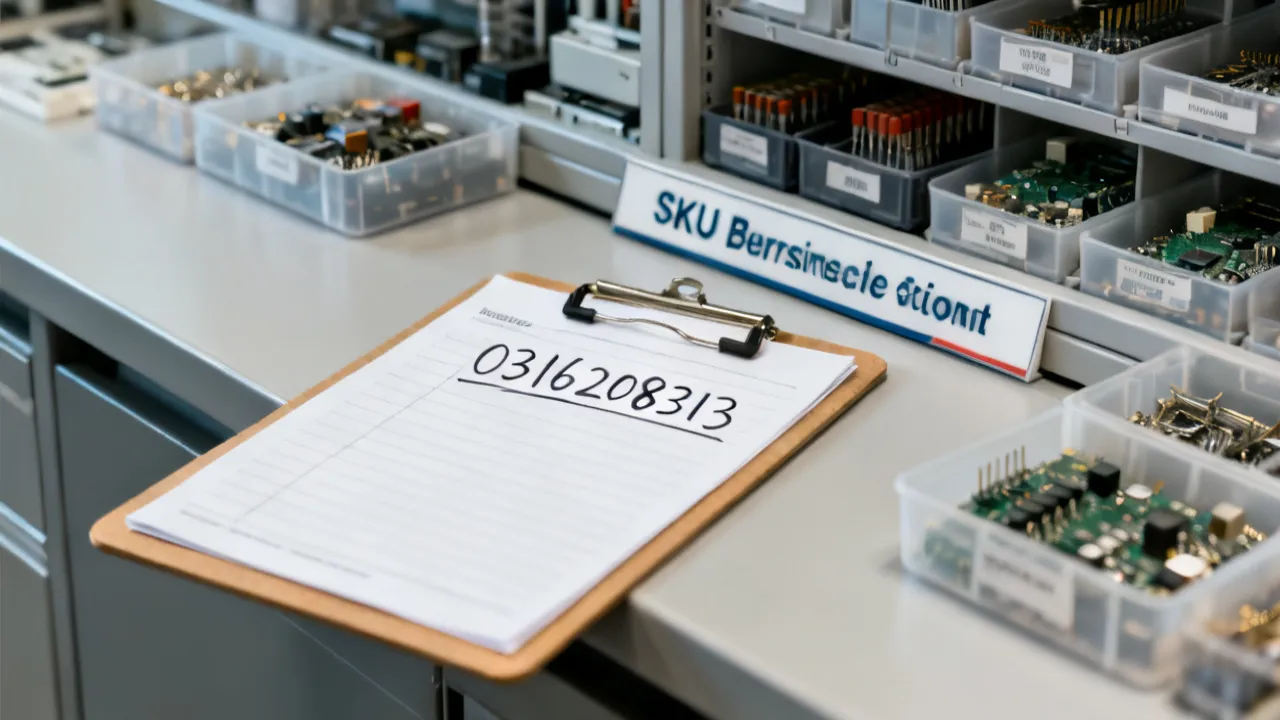
Practical Guide to Contacting Supplier 03166208313
This guide explains how to evaluate and contact a supplier associated with “03166208313” using professional sourcing practices. It provides objective background on how supplier contact details, product traceability, and procurement documentation reduce risk. The article also outlines practical conditions for communication, verification steps, and common questions businesses ask before placing orders.
