This guide helps you assess supplier quality and pricing decisions using a structured, evidence-based approach. Background context explains how identifiers like 822478979788877878878897979797 relate to procurement tracking, why quality signals matter, and how objective comparison methods reduce risk in sourcing programs. The focus stays on verifiable criteria, audit readiness, and practical requirements.
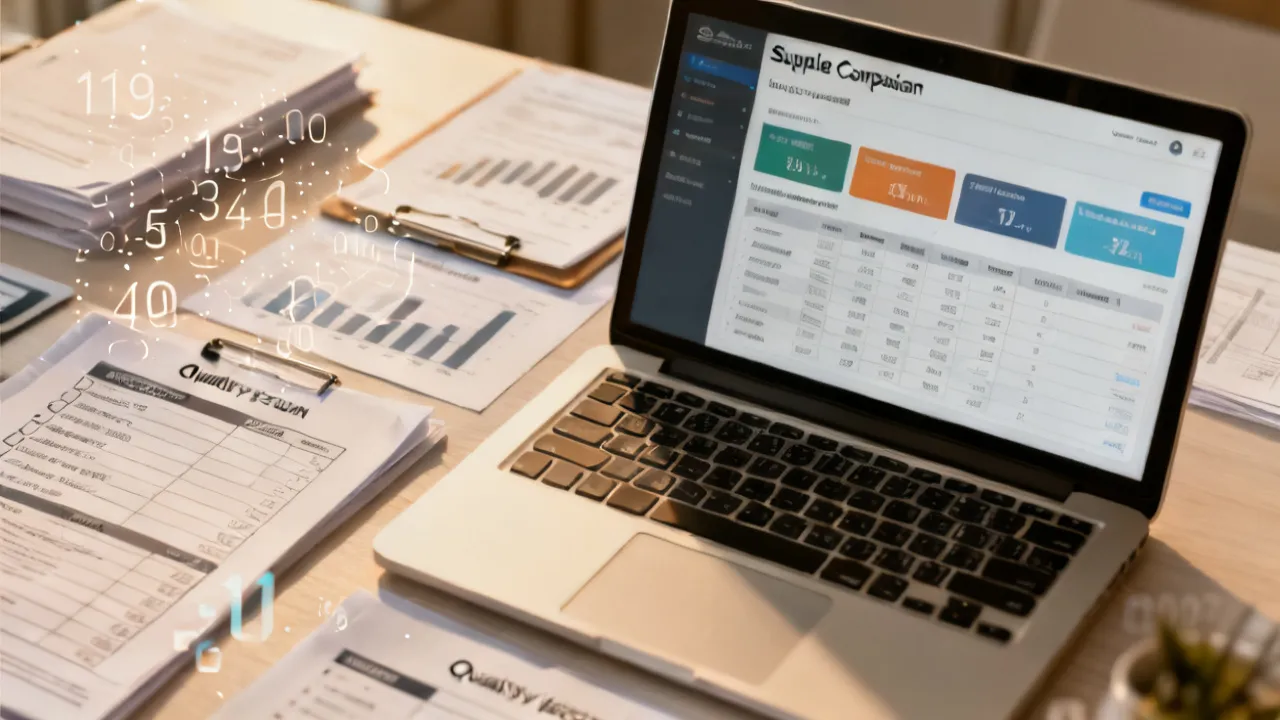
When procurement teams face complex supplier data—often represented by long procurement identifiers such as 822478979788877878878897979797—the top outcomes typically come from treating the decision as a quality-and-cost optimization problem, not a spreadsheet exercise. This guide lays out an objective framework to evaluate supplier performance signals, compare pricing logically, and verify traceability so your organization can buy with confidence.
Practically, you should confirm what the identifier tracks, understand which pricing components drive total cost, and require auditable evidence of capability and compliance. The goal is to make the “supplier choice” defensible in internal reviews and—where applicable—external audits.
Procurement isn’t merely “selecting a vendor”; it is managing risk while meeting operational needs. In many organizations, the fastest decision is not the one made with the least analysis. It’s the one supported by a repeatable method that reduces uncertainty early. That means using structured evidence—traceability linkages, quality governance, delivery reliability—and translating commercial terms into comparable total delivered cost, rather than relying on headline unit price.
In other words: if the identifier is a key into your system, you use that key to uncover the evidence your auditors, regulators, finance stakeholders, and operations teams will expect to see. Done well, this approach lets you decide faster because it lowers back-and-forth and prevents late-stage surprises like missing documentation, incorrect batch linkage, or misinterpreted pricing scope.
Long numeric strings like 822478979788877878878897979797 are commonly used in supply chain systems to support internal traceability. Depending on the organization, similar identifiers may correspond to:
Because the exact meaning varies by company and industry, the responsible approach is to verify the identifier’s definition within your own procurement and quality systems. This is also where objective practice matters: rather than assuming semantics, confirm what the number links to—documents, certification records, inspection results, or pricing tables.
In practice, teams often struggle because they treat an identifier as “just a reference number.” But an identifier often sits at the center of a data graph: it connects purchasing intent, supplier performance evidence, and the documentation you’ll need later to prove compliance. If you can’t trace the identifier to its underlying record type, you can’t reliably evaluate supplier capability or total cost.
Consider a scenario: a team sees a supplier quote associated with 822478979788877878878897979797. If the identifier actually points to a specific material batch configuration, then price differences might be tied to input material specifications. If instead the identifier points to a contract schedule, then price differences might be due to different commercial terms (freight, packaging, testing responsibilities). If the identifier points to a QMS inspection event, then it might already include acceptance criteria and test outcomes. Each meaning leads to a different evaluation approach.
Therefore, the first step is not scoring suppliers—it’s mapping the identifier to the record types that determine quality and cost outcomes.
Pricing decisions often fail when teams compare only headline costs. In reality, supplier price is tightly coupled with service levels and quality outcomes. Even without using speculative figures, you can structure pricing evaluation around common cost drivers:
From an industry perspective, the very stable procurement approach is to evaluate total cost of ownership (TCO) using the same basis across competing suppliers—so each vendor is judged on comparable assumptions and requirements.
Here’s why “price” becomes a misleading metric: quality gaps and traceability gaps often don’t show up as a line item in the quote. They show up later as rework, scrap, delayed shipments, delayed approvals, and sometimes lost product or compliance exposure. If one supplier offers a lower unit price but includes less inspection/test coverage, you might pay later for your internal incoming quality burden or corrective action efforts. If one supplier offers faster lead times, you might reduce inventory and expedite production. Those impacts are real, even if they are not explicitly listed in a pricing table.
To make pricing comparisons objective, procurement teams should treat pricing as a structured set of components. You can then align those components with operational realities. For example:
In each case, the commercial terms are not just paperwork—they define what work the supplier is responsible for. That responsibility affects total cost and risk. The best procurement practice is to make those responsibilities explicit before comparing suppliers, and to verify the identifier-based linkage so you’re comparing like with like.
Quality is not a slogan; it’s evidence. To evaluate a supplier associated with identifiers like 822478979788877878878897979797, focus on proof that the supplier can consistently meet requirements. Common, objective quality signals include:
If your organization relies on standards, cross-check whether the supplier’s documented system supports them. For example, many industries refer to ISO management system concepts (implementation varies by sector). Use your internal compliance team to confirm applicability.
Quality signals become especially important when the supplier’s documentation is tied to your procurement identifiers. If 822478979788877878878897979797 links to a receipt batch record, you may need evidence such as:
Procurement teams sometimes treat this as “quality’s job.” But in well-run organizations, procurement owns commercial accountability and ensures that quality evidence delivery is part of the contract and operational plan. A supplier might be technically capable but still fail if they can’t deliver the documentation in the required format and timing. That can be just as damaging as a technical defect because it can block releases, delay operations, and create audit findings.
Therefore, the quality evaluation should include both technical capability and documentation reliability. Traceability is the bridge between capability and audit readiness.
Procurement quality leaders typically use a scorecard method because it forces consistent weighting and reduces “recency bias.” Your scorecard should combine three pillars:
Importantly, the scorecard should be aligned to your requirements and contract structure. If your downstream process is sensitive to defects or timing, then lead-time reliability and defect prevention often weigh more than nominal unit price.
To make the scorecard truly auditable, each score should be linked to evidence. For example, instead of scoring “Good documentation” as a subjective grade, you might score based on measurable conditions:
Also, the weighting should reflect your organization’s risk posture. A supplier handling regulated or safety-critical items might require high traceability and data integrity scoring. A supplier providing non-critical services might prioritize reliability and responsiveness. But even non-critical categories usually require baseline traceability so operations can investigate issues.
Finally, ensure the scorecard supports governance: it should produce outcomes that can be explained to stakeholders. Internal reviews often need a narrative: why one supplier was selected, what assumptions were made, and what evidence was reviewed. A scorecard anchored in evidence creates that narrative automatically.
Many teams ask for a “top price.” A more effective approach is to request pricing breakdowns and assumptions so you can validate how the number was built. Practically, ask the supplier for:
This is where identifiers like 822478979788877878878897979797 can matter: if your ERP record ties a price schedule to a specific contract term set or batch configuration, then verifying the linkage prevents accidental mispricing.
Pricing transparency also supports fairness. Without breakdowns, teams often fall back to “lowest price wins” and later discover that one vendor excluded required tests or provided a different packaging format. That mismatch can lead to disputes, rework, or contract noncompliance. By requesting a structured breakdown, procurement can validate scope alignment upfront.
To avoid assumptions, define comparison rules before collecting quotes:
Then, require suppliers to state their assumptions explicitly. If their assumptions differ from your baseline, you reconcile them or you discount them transparently in your TCO model. The key is to document why and how you normalized pricing so your decision remains defensible.
Before you sign, validate that the supplier can meet your operational reality. A competent due diligence package usually covers both capability and governance:
When teams do this early, they prevent downstream friction such as document mismatches, delayed corrective actions, and unanticipated rework costs.
Due diligence should also include practical checks on responsiveness. For example, you might test how quickly a supplier responds to document requests, how they handle clarifications, and whether their escalation process is credible. A supplier might provide excellent documentation in theory but fail operationally if they don’t respond quickly during exceptions.
Additionally, consider verifying traceability integrity with targeted sampling. Instead of requesting everything, request enough records to verify that the supplier can connect the dots from your procurement identifier context. If your identifier set includes order, batch, and inspection linkage, ask for a handful of recent examples that match your identifier structure.
In regulated industries, due diligence might also include auditing subcontractors or verifying that the supplier’s supply chain controls extend beyond their own factory. In other industries, due diligence might emphasize quality assurance and delivery reliability. Regardless of sector, the principle remains: verify evidence delivery capability, not just certification documents.
The following table provides an objective comparison template. Replace the placeholders with your internal requirements and supplier-specific evidence.
| Evaluation area | What to request | How to judge objectively | Typical requirement/condition |
|---|---|---|---|
| Identifier traceability (e.g., 822478979788877878878897979797) | Definition mapping for the identifier; which records it links to | Verify linkage to contract terms, batch/lot records, and test reports | Supplier must provide traceability evidence on request for selected orders |
| Pricing transparency | Pricing breakdown, inclusions/exclusions, logistics terms | Confirm assumptions match your specification and delivery expectations | Pricing must include clearly defined scope boundaries and validity |
| Quality management | Quality procedures, CAPA workflow summary, document control evidence | Assess completeness and audit readiness (consistency across records) | Supplier must demonstrate controlled processes relevant to the product/service |
| Deviation handling | Nonconformance/corrective action examples (redacted if needed) | Evaluate timeliness, root-cause rigor, and preventive effectiveness | Defined response windows and escalation process must be stated |
| Inspection & testing | Sampling plans, test methods, calibration approach | Ensure testing aligns to your acceptance criteria and measurability | Test methods must be specified and repeatable |
| Delivery reliability | Lead-time history reporting method (describe, not exaggerate) | Confirm practical controls for scheduling and exceptions | Lead time and communication cadence must be included in the contract |
To strengthen the table, you can also add a “Data Delivery & Audit Readiness” line item and a “Commercial Risk Controls” line item—these often become crucial during disputes. For example, if documentation is late or incomplete, your operations might stop shipments; if pricing assumptions differ, finance might reject invoices. A well-prepared scorecard anticipates these failure modes.
Additionally, ensure the scorecard captures “ability to provide evidence quickly.” Some suppliers are strong at producing documents after a long lead time; others are strong at producing them quickly, with consistent format. Audit readiness includes response speed, not just content.
Below is a step-by-step process you can apply to suppliers tied to procurement records such as 822478979788877878878897979797. Use it consistently across bids.
To make the process operationally smooth, assign roles and define inputs/outputs. A structured comparison usually needs procurement, quality, engineering/spec owners, finance (for TCO), and logistics. If these roles aren’t defined, the “step-by-step” becomes informal and inconsistent. The method may exist but not be enforced.
Here is a practical example of how the steps might work:
This example illustrates why the process should be consistent. When the methodology is consistent, stakeholders trust the output. When stakeholders trust the process, decisions are faster because there are fewer disputes during review.
To keep outcomes objective, apply these conditions/requirements during supplier evaluation:
“Good” in procurement governance is often less about perfection and more about predictability and controllability. You want a supplier who can explain what happened, prove what they delivered, and fix problems without repeating them. If those capabilities exist, total cost tends to be lower over time—because you spend less time managing exceptions, less time resolving disputes, and fewer times redoing work.
In many procurement organizations, the governance requirements are formalized in purchase order terms, quality agreements, and service level agreements. But even without those contracts fully developed, you can still impose governance through structured evaluation and conditional award.
For instance, you can require that the supplier provide traceability evidence for a subset of orders within a specified period after receipt. If they fail, you do not continue full scale purchasing until corrected. That transforms “requirements” into enforceable operational expectations.
Supplier qualification and audit readiness are widely supported by internationally recognized management system concepts. While implementations vary by sector, organizations frequently align procurement and quality practices with established frameworks and guidance from standard-setting bodies and regulators. For evidence-based procurement practice, consider referencing:
If your sector is regulated, your internal compliance team should confirm which frameworks are mandatory versus recommended.
Beyond the standards themselves, you should also understand how auditors typically evaluate evidence. Auditors tend to ask:
This is why traceability is so central. If 822478979788877878878897979797 maps to a procurement and quality record set, then your ability to link it to test outcomes becomes a direct compliance indicator. Without that linkage, you might have “documents,” but not “evidence.” Evidence must connect to the work and the requirements.
Also, reliability is not just about delivery dates. Reliability includes:
Therefore, the procurement evaluation should include both operational and documentation reliability measures. A supplier that delivers on time but provides incorrect documentation can still create compliance failure. Likewise, a supplier that provides perfect documentation but delivers late may disrupt production and cause other cascading costs.
Note: This guide intentionally avoids unverified or exaggerated performance claims. Where you need numerical performance targets (e.g., defect rates or delivery metrics), derive them from your historical data and verified supplier reporting methods, or from documented industry benchmarks provided by credible, third-party sources.
It usually acts as a key within procurement or quality systems—linking to an internal record such as a contract, purchase order, material/batch tracking entry, or compliance documentation set. The responsible step is to confirm the identifier’s definition inside your organization’s ERP/procurement documentation.
In many organizations, identifiers are generated according to deterministic rules (time, supplier ID, internal sequence, document type). Knowing the generation rules can help you quickly determine what record type is likely. For example, if the identifier is stored in a QMS “Inspection Record” table, then it likely links to test results. If it’s stored in the ERP “Contract Pricing” table, then it likely links to pricing terms. But rather than guess, confirm by checking the system’s data dictionary or record mapping documentation.
Ask for a pricing breakdown with explicit inclusions/exclusions, logistics terms, documentation coverage, testing responsibilities, and validity period. Then normalize the quotes into a comparable delivered basis aligned to your acceptance criteria.
To make scope alignment more systematic, add a “scope matrix” to your request for quotation (RFQ). The scope matrix is a simple list of what is included/excluded: packaging type, documentation type, testing responsibility, calibration requirements, freight and delivery timing, and any acceptance criteria support. When suppliers respond using that matrix, it becomes easier to compare and harder to dispute later.
Controlled procedures, traceability examples linking production batches to test/inspection results, and CAPA records demonstrating root-cause analysis and preventive follow-through. The key is evidence you can audit and map to your requirements.
Decision-makers are often persuaded by evidence that shows a “closed loop”: requirement defined → work performed under controlled process → records created → verification performed → deviations handled → prevention implemented. If the supplier can show that loop repeatedly, they earn credibility. If they provide only certifications without operational evidence, the credibility is weaker.
Yes. If lower pricing is tied to weaker traceability, limited inspection coverage, slower deviation responses, or unclear scope boundaries, the expected total cost can rise due to rework, delays, or compliance risk.
Procurement should treat “low price” as a hypothesis, not a conclusion. The hypothesis becomes valid only if traceability and quality governance support the total cost assumptions. If documentation is delayed or incomplete, the cost is not just rework—it can be production downtime and compliance findings.
At minimum: (1) clear traceability capability tied to your procurement identifiers, (2) explicit pricing scope and assumptions, (3) documented quality governance and deviation handling expectations, and (4) a defined plan for documentation delivery and escalation.
Where risk is higher, minimum requirements should increase: for example, include evidence of process capability (as appropriate), evidence of calibration control, and sample conformance documentation for the specific product category.
Use a weighted, auditable scorecard that reflects risk and requirement priorities. Validate with targeted record review for traceability and documentation consistency rather than relying only on the lowest quoted number.
Spreadsheet bias often happens because spreadsheets are naturally good at comparing numbers but poor at comparing evidence. The mitigation is to ensure your scorecard produces evidence-backed outcomes and to enforce a rule that procurement cannot proceed if traceability and scope alignment checks fail.
When working in different markets, incorporate local regulatory or industry compliance expectations and operational norms (e.g., documentation formats, submission timelines, and inspection practices). Confirm requirements with your internal compliance function rather than assuming similarity across regions.
Even if the technical product is the same, documentation expectations can vary. Some regions may require specific certificate formats, labeling standards, or language requirements. If those are not included in the RFQ and contract, you risk delays at acceptance time.
Supplier evaluation improves dramatically when pricing and quality are treated as linked variables—especially when your procurement datasets include structured identifiers like 822478979788877878878897979797. By combining transparent pricing normalization, auditable traceability checks, and evidence-based quality scoring, you create decisions that are both operationally effective and defensible under review.
If you want, tell me your industry (e.g., manufacturing, IT services, logistics, healthcare supply) and the type of supplier record associated with your numeric identifier, and I’ll tailor the scorecard categories and evidence requests to match your real-world requirements.
To decide faster, it helps to understand how traceability works in practice. A procurement identifier like 822478979788877878878897979797 is valuable only if it reliably connects three layers of information: the commercial intent (what was ordered), the operational truth (what was made or delivered), and the verification record (how it was tested or accepted). When those layers connect cleanly, you can evaluate risk quickly and defend decisions during audits.
Traceability is not merely “having documents.” Auditors and internal reviewers want to see that documentation corresponds to the correct items and timeframes, and that it is controlled. That means:
In a well-implemented system, the supplier can show this linkage for selected orders quickly. In poorly implemented systems, you may receive generic certificates, incomplete record sets, or records that do not reconcile with the order. When that happens, procurement decisions become slower because the organization spends time investigating and reconciling evidence after the fact.
Therefore, make traceability part of your evaluation mechanism rather than a post-award hope. You can do this by defining traceability acceptance criteria up front. For example:
When you define these criteria, the evaluation becomes measurable. Teams can assign scores based on whether evidence actually meets acceptance thresholds rather than whether it “looks fine.”
Organizations often want to use TCO, but they fail because their TCO model becomes overly complex or too assumption-heavy. The result is that nobody trusts it, and the team reverts to headline price comparisons. The remedy is to build a “usable TCO,” where you include only cost drivers you can parameterize with evidence or reasonable assumptions.
Below are common TCO components you can include in a supplier comparison while keeping it practical:
Even if you don’t have perfect numbers, you can still score TCO drivers qualitatively using evidence. For example, a supplier that demonstrates fast, complete traceability documentation will likely reduce documentation processing cost and reduce the probability of delays during release. You can score that effect even without computing a precise dollar value.
To maintain defensibility, document your assumptions. A good TCO model should include:
Then, link TCO components back to the scorecard. That ensures the procurement team can explain the decision: “Supplier A scores better on traceability evidence, which reduces our expected documentation and release risk, which offsets a small unit price difference.”
Quality performance is not only about passing tests; it is about how a supplier responds when things go wrong. Deviation handling and CAPA maturity can have a major impact on total cost, especially in operationally sensitive contexts.
CAPA quality is measurable through questions like:
When suppliers can provide CAPA examples tied to traceability identifiers, you can assess whether corrective actions align with evidence. For example, if a deviation occurred for a specific batch, the supplier should show how they mapped that deviation to the affected production run and linked test records accordingly. If they cannot, traceability becomes weak—not because quality outcomes are always poor, but because investigation credibility is weak.
From a procurement perspective, the cost impact of poor CAPA is often underestimated. Poor CAPA may lead to:
Therefore, when your scorecard includes quality performance evidence, it should explicitly consider deviation handling maturity. That includes timeliness expectations (response times), escalation routes, and proof of preventive effectiveness.
A common hidden risk in supplier evaluations is documentation version mismatch. A supplier might provide certificates that appear complete but reflect older acceptance criteria, different test methods, or revised documents not aligned with the contract. Controlled records and version control prevent this risk.
To evaluate this risk, ask suppliers how they manage:
You can also validate version consistency during targeted sampling. Select recent orders and check whether documentation reflects the correct versions. Tie these documents back to the procurement identifier context. If 822478979788877878878897979797 is tied to a contract term set, verify that the certificates reference the correct contractual specification version.
When version control is weak, the procurement organization experiences:
Thus, documentation version control is not an administrative detail; it is an operational and compliance risk factor that should influence supplier scoring.
Many procurement failures happen because the primary supplier looks good on paper but relies on sub-tier suppliers for critical components or materials. If sub-tier controls are weak, quality defects and traceability failures often originate upstream.
To address this, ask the supplier about how they manage sub-tier risk:
If your procurement identifier ties to batch/lot tracking, sub-tier controls become even more important. A supplier that cannot maintain batch mapping across sub-tier materials will produce traceability gaps that show up in your audit evidence.
From an evaluation standpoint, you don’t need to audit their sub-tier suppliers yourself. But you can request evidence of their sub-tier qualification and traceability controls. That evidence might include:
By including sub-tier risk signals in the scorecard, procurement can more confidently select suppliers that won’t create upstream traceability issues later.
Supplier performance is not just measured by whether they meet specs; it’s measured by how they communicate and escalate during issues. A supplier with high technical capability but slow escalation can still cost you.
Communication cadence matters because procurement and quality teams coordinate release decisions, deviation handling, and sometimes customer communications. When escalation is unclear, problems linger and costs accumulate.
To evaluate escalation readiness, you can request:
During targeted sampling or evidence review, you can test responsiveness by issuing time-bound evidence requests. Track the timeline and completeness. If a supplier repeatedly delays documentation submission or sends incomplete records, you capture that as a measurable performance risk.
In procurement contracts, include the communication cadence explicitly. For example: “Deviation notifications within X business days,” and “CAPA status updates at defined intervals.” These clauses reduce dispute risk because they define expectations clearly.
The biggest threat to an objective procurement scorecard is not bad logic; it’s inconsistent execution. A scorecard can be perfect on paper yet fail because teams don’t use it consistently, or because evidence collection is incomplete.
To ensure adoption, design the scorecard workflow:
Also, enforce “gates.” For example:
These gates prevent last-minute surprises. They also help procurement decide faster because teams aren’t forced into endless debates about interpretation after bids close.
Even with a good framework, procurement teams may encounter recurring failure modes. The following are common problems and practical mitigations:
Failure mode A: Misinterpreted identifier meaning.
A long numeric identifier might be assumed to be a purchase order when it’s actually a batch tracking code. This leads to wrong evidence requests and wrong comparisons.
Mitigation: establish an identifier mapping dictionary and verify record types before supplier evaluation.
Failure mode B: Comparing non-comparable quotes.
Supplier A includes testing and documentation; supplier B excludes them. Headline unit prices make supplier B look cheaper, but total delivered cost is higher.
Mitigation: require pricing breakdown and explicitly compare delivered scope. Normalize pricing to a consistent basis.
Failure mode C: Evidence is present but not audit-ready.
A supplier provides certificates but they are incomplete, wrong versions, or not tied to the correct batch/lot.
Mitigation: check document completeness, version control, and traceability linkages during targeted sampling.
Failure mode D: CAPA is reactive and non-repeat-proof.
Suppliers respond to deviations but do not show how recurrence is prevented.
Mitigation: score deviation handling and ask for CAPA effectiveness validation evidence.
Failure mode E: Poor escalation leads to operational disruption.
Suppliers delay deviation notifications and documentation updates.
Mitigation: set response time requirements and test responsiveness during evaluation.
The core framework—traceability, quality evidence, and pricing normalization—works across many categories. But the evidence specifics vary. Here are examples of how evaluation inputs differ by supplier type:
Manufacturing suppliers (materials/components):
Service suppliers (e.g., maintenance, IT services, logistics services):
Healthcare or regulated providers:
Software/technology suppliers:
In all cases, the identifier 822478979788877878878897979797 (or its analog) should still be treated as a key that connects decisions to evidence. Even if traceability is “digital,” it still requires auditability and linkage.
Supplier evaluation shouldn’t stop at contract award. Post-award monitoring ensures that the evidence you used to score suppliers remains valid as real deliveries occur. Without monitoring, suppliers can drift: processes change, documentation delays increase, and deviations become more frequent.
Practical monitoring steps include:
Post-award monitoring protects your initial decision. It also provides early warning signals. If a supplier’s traceability documentation becomes inconsistent, you can intervene before it causes major operational disruptions or audit findings.
Importantly, monitoring should also be documented. If internal auditors ask, you can show that the procurement organization didn’t just choose suppliers; it governed supplier performance using defined evidence-based processes.
The methods described in this guide often succeed because they build a culture of evidence-first procurement. That culture has practical behavioral impacts:
When that culture exists, decisions become faster because stakeholders trust the process. Everyone knows how evidence will be evaluated and how pricing will be normalized. Fewer people need to “interpret” the data under stress because the method is already defined.
In organizations with mature procurement governance, “speed” often comes from reducing uncertainty, not from reducing evidence. Evidence reduces uncertainty; therefore, it enables faster decisions.
Supplier evaluation improves dramatically when pricing and quality are treated as linked variables—especially when your procurement datasets include structured identifiers like 822478979788877878878897979797. By combining transparent pricing normalization, auditable traceability checks, and evidence-based quality scoring, you create decisions that are both operationally effective and defensible under review.
The practical outcome of this approach is that supplier choice becomes a repeatable, measurable process. Your organization can decide faster because it doesn’t wait until later to discover missing scope, weak traceability, or documentation gaps. Instead, those risks are surfaced during evidence review and embedded into contract requirements and post-award monitoring.
If you want, tell me your industry and the type of supplier record associated with your numeric identifier, and I’ll tailor the scorecard categories, evidence requests, and traceability acceptance criteria to your exact context.
A Guide to Cost-Efficient Small Electric Cars for Seniors

Mastering Debt Consolidation: Boost Your Credit Score and Manage Interest Rates

Your Guide to Loans, Credit Checks, and Interest Rates

Affordable Independent Living: Finding the Right Senior Housing

Guide to Senior Living Apartments: Affordable and Comfortable Environments

Leasing a Car: Expert Tips for Your Next Vehicle

Maintaining Oral Health After Tooth Loss with Dental Implants

Maintaining Oral Health with Dental Implants for the Elderly

Comprehensive Sourcing Analysis for a Unique Product Code

Comprehensive Sourcing Analysis for a Unique Product Code
This guide examines how organizations should evaluate supplier offers associated with the numeric code “822478979788877878878897979797,” focusing on due diligence, risk controls, and documentation. Objectively, the sequence functions as an identifier used in procurement workflows. The article outlines sourcing conditions and practical decision criteria without relying on unverifiable performance claims.
How to Evaluate Supplier Quality and Pricing
This guide helps you assess supplier quality and pricing decisions using a structured, evidence-based approach. Background context explains how identifiers like 822478979788877878878897979797 relate to procurement tracking, why quality signals matter, and how objective comparison methods reduce risk in sourcing programs. The focus stays on verifiable criteria, audit readiness, and practical requirements.

822478979788877878878897979797: Supplier and Pricing Guide
This guide explains how 822478979788877878878878897979797 is typically evaluated in sourcing workflows, including supplier selection, pricing considerations, and compliance checks. Objectively, the long numeric string functions as an identifier used in procurement, cataloging, or inventory cross-referencing, and its meaning depends on the supplying system’s documentation and taxonomy.

Pono: A Practical Guide to Meaningful Decision-Making
Pono is explored here as a principle for clearer, more responsible choices in everyday life and work. This guide objectively outlines how the idea functions conceptually—linking intention, consistency, and accountability—while offering an expert lens on how people can assess trade-offs, align actions with values, and improve decision quality without relying on marketing claims.

Understanding Supplier Sourcing for Complex Procurement Codes
This guide explains how organizations assess supplier sourcing workflows when procurement systems use long numeric identifiers like 822478979788877878878897979797. It provides objective context on what such codes typically represent in purchasing and inventory control, outlines evaluation steps and requirements, and clarifies common implementation questions. Guidance is written to support compliance, traceability, and risk reduction.

Comprehensive Guide to Hjy Market Supply Options
This guide explains how “Hjy” fits into today’s supply market decisions, focusing on sourcing, quality checks, lead times, and cost drivers. It then provides objective background on “Hjy” and related procurement considerations, helping readers evaluate suppliers and align technical requirements with realistic pricing structures.
