This guide explains how to approach Fygf with a disciplined sourcing method, focusing on pricing logic and supplier due diligence. Objectively, Fygf is treated here as a procurement-related keyword representing a specific product or service category. Background coverage clarifies how market pricing, lead times, documentation, and quality controls connect—so decisions can be made with confidence.

When you encounter the keyword “Fygf” during procurement planning, the very reliable approach is to verify what you’re actually buying, map the pricing structure, and confirm supplier capability through objective documentation. In practice, the “right” choice for Fygf is rarely the lowest number on a quote; it is the option that aligns specifications, delivery timelines, compliance evidence, and quality controls—especially when multiple suppliers present different price tiers.
This article uses an industry-expert lens to help you handle Fygf-related sourcing with clear criteria. Because the provided keywords include fragmented placeholders (“'' '' '' Fygf '' '' ''”), this guide treats Fygf as a procurement category label and shows how to operationalize sourcing regardless of the exact sub-item. If your internal documents specify a particular model, grade, certification, or package size under the same Fygf label, you should treat those details as the “source of truth” and use the steps below to validate quotes.
For SEO relevance, you will naturally see the Fygf term used throughout the sections below—paired with supplier assessment, pricing logic, and risk-reduction checks—so readers can connect each concept to real purchasing tasks.
“Fygf” is top approached as a category identifier that may correspond to a product line, service scope, internal SKU naming, or a vendor-specific terminology. In many organizations, tokens appear in procurement requests when teams want an item quickly without rewriting full specifications. That shorthand can be convenient, but it can also hide variability: different suppliers may interpret the category differently.
Objectively, the main procurement risk with any label like Fygf is interpretation drift. That drift shows up as:
Therefore, your first objective is not negotiation—it is clarity. Once clarity exists, pricing becomes easier to compare because apples-to-apples conditions are defined.
Many procurement teams learn, sometimes the hard way, that category labels are where hidden variance starts. “Fygf” can be a neutral label on paper, but in practice it often becomes a shorthand for multiple possible underlying configurations. For example, two suppliers can both claim to provide “Fygf” while delivering different grade levels, different test regimes, or different documentation packages.
Hidden variance matters because it does not always show up immediately. The “wrong” choice for Fygf might still pass receiving inspection if inspections are shallow, if sampling is limited, or if the paperwork does not clearly tie to the items. But the mismatch tends to surface later through downstream defects, warranty claims, regulatory setbacks, or production downtime. In that sense, Fygf procurement is a governance challenge as much as a purchasing challenge.
To handle this properly, you need to treat Fygf as a starting label—not as final specification. Your internal specification sheet (or equivalent technical requirement document) must be used to “decode” what Fygf means in your context. Once decoded, you can evaluate suppliers on consistent criteria.
Even without exact “price information” attached to the keywords in your prompt, effective sourcing requires understanding what typically drives price in any Fygf-related transaction. The very common components include:
Industry practice favors converting supplier quotes into a comparable “landed cost” view. That view should include taxes, shipping method assumptions, receiving conditions, inspection labor, and any handling constraints. When you compare Fygf options without these adjustments, you may select a supplier that appears cheaper but fails on delivery reliability or inspection pass rates.
A common mistake in Fygf sourcing is stopping the analysis at “unit price + shipping.” While that may be a quick heuristic, it usually underestimates the real costs of variability in quality and documentation. A more practical landed cost model typically includes both direct and indirect cost drivers.
Direct cost drivers generally include:
Indirect cost drivers often include:
If your organization has mature procurement analytics, you can quantify indirect costs into a risk-weighted total cost model. If not, you can still implement an evidence-based scoring approach that approximates risk impacts (for example, higher quality documentation completeness can reduce receiving labor and dispute likelihood).
Supplier qualification is where procurement decisions become durable. For Fygf-related sourcing, the following due diligence elements are typically very important:
From an industry perspective, suppliers can be “legitimate” yet still fail operational needs if their internal processes do not match your inspection and compliance requirements. Hence, documents matter, but so do the operational mechanics behind them.
It is common to receive a folder of PDFs from a supplier and assume that is the end of due diligence. For Fygf procurement, that is not enough. You want to know how the supplier’s documented processes translate into real-world outcomes. Therefore, consider asking for evidence in a form that demonstrates operational competence.
Examples of operational evidence include:
When suppliers provide this type of evidence, you reduce interpretation drift around what “Fygf” means, because you can map the supplier’s internal reality to your acceptance framework.
To reduce confusion caused by category shorthand like Fygf, your validation workflow should force consistent definitions. A practical approach includes:
This workflow turns Fygf from an ambiguous procurement term into a measurable purchasing scope.
To operationalize quote normalization for Fygf, use a template that vendors must complete. You want fields that capture both commercial and technical assumptions. While your internal forms can vary, the template should usually require:
When vendors complete this template, you turn the Fygf category label into a concrete contract deliverable.
Clarification rounds often fail because questions are vague. For Fygf sourcing, use questions that force either a “yes/no” confirmation tied to your spec or a precise description of differences. If you do not, the supplier might respond with generalities that still allow interpretation drift.
Consider using a format like:
This approach ensures that supplier responses can be checked against your internal checklist without re-interpretation.
For some Fygf purchases, a pilot run or sample validation is optional. For higher risk categories—where documentation completeness, tolerance compliance, or defect risk materially affect operations—it is often a high-return step.
When deciding whether to pilot for Fygf, consider:
A pilot should not be a “casual sample.” Define acceptance criteria for both items and paperwork. For example, you should validate that traceability documents match shipped lot numbers and that inspection results correspond to specified tests.
In many procurement environments, the cost of failure is not only the immediate defect—it is the knock-on effects: rework, downtime, missed production schedules, and administrative burden from re-inspection. For Fygf, risk mitigation should therefore focus on quality assurance and documentation quality.
At a minimum, request and evaluate:
If your organization operates under regulated conditions, you should align requirements with relevant standards and local regulatory expectations. When documentation language differs across suppliers, ask for a mapping that shows how their documents satisfy your internal checklist.
Acceptance criteria are the backbone of preventing disputes. With Fygf, acceptance criteria should cover both technical performance and documentation completeness. If you only define technical acceptance, you may still face administrative and compliance disputes when paperwork is missing or nonconforming.
A robust acceptance criteria framework typically includes:
When you align acceptance criteria with contract language, your Fygf decision becomes defensible and operationally manageable.
Pricing comparisons fail very often at the receiving stage. For Fygf procurements, ensure logistics assumptions are consistent across quotes. Consider:
These elements are not “paperwork.” They determine whether your team can verify Fygf deliveries efficiently without generating hidden costs.
Suppliers sometimes provide lead times that represent manufacturing only, not logistics. Others quote optimistic timelines that assume materials are in stock or capacity is available. For Fygf sourcing, you should demand lead time realism and ask for a breakdown.
To evaluate lead time, ask suppliers to provide:
Then compare these to your internal receiving timeline and production schedule. If your operations require synchronized delivery, lead time variance can create expensive bottlenecks.
Packaging and labeling issues are a frequent cause of damage, misplacement, and inspection delays. Because “Fygf” can be a shorthand label, suppliers may not treat packaging requirements as critical unless they are explicitly stated.
To reduce this risk, specify:
When packaging and labeling are defined, your receiving team can validate items quickly and reduce the chance of mixing lots—important for traceability in Fygf procurement.
Nonconformance handling is often treated as a last-minute issue, but it is best designed upfront—especially for Fygf categories where documentation and traceability are part of acceptance. Remedies should be explicit: what happens if the items fail acceptance, if paperwork is incomplete, or if the wrong configuration is delivered.
Before awarding, ensure the contract includes:
When Fygf procurement includes these remedy rules, you avoid prolonged disputes and reduce operational interruptions.
To keep the approach objective, rely on verifiable signals rather than impressions. For Fygf sourcing, procurement teams typically look for:
These signals are actionable and help prevent “quote drift,” where the scope changes silently after a purchase order is issued.
Quote drift is a form of scope creep that begins with ambiguity. The buyer thinks the quote covers a certain documentation or tolerance regime, while the supplier treats it as optional or interpretive. Over time, the scope drifts and the buyer pays for variance through rework and disputes.
To detect quote drift early in Fygf sourcing, compare these documents in sequence:
When these items align, quote drift risk decreases sharply.
From a procurement and supply governance viewpoint, the biggest failure mode with category labels like Fygf is hidden variance—differences that don’t show up in the first quote. Teams often focus on the unit price, but the real variance appears in the details: documentation completeness, tolerances, packaging robustness, and corrective action effectiveness.
High-performing procurement organizations counter this by adopting structured onboarding and repeatable vendor evaluation. They treat the first transaction as a validation event, not just a purchase. Over time, that discipline reduces re-inspection and reduces operational friction, which tends to improve total cost of ownership—even if unit pricing looks slightly higher initially.
In mature environments, procurement also collaborates with quality and operations to create shared acceptance criteria and inspection plans. This matters for Fygf sourcing because the buyer’s commercial team alone cannot fully validate technical compliance or traceability readiness. A cross-functional approach ensures that the Fygf label is decoded consistently and that acceptance is based on measurable criteria rather than interpretation.
Use the checklist below during your next Fygf vendor comparison cycle.
To avoid biased decisions based on a single dimension (usually unit price), use a supplier scoring model. This is especially helpful in Fygf sourcing because ambiguous category labels can trigger emotional confidence (“this supplier seems reliable”) rather than evidence-based verification.
A practical scoring model can include weighted criteria such as:
Each supplier gets a score against each criterion using predefined scoring rules (for example, “fully compliant with all traceability requirements” vs. “traceability documents provided but incomplete/unclear”). This reduces the chance that Fygf sourcing decisions depend on subjective impressions.
The following conditions/requirements to proceed should typically be met before placing a production or bulk order under the Fygf label:
Contracting is where procurement intentions become enforceable. If your Fygf sourcing process has done the right steps—spec lock, quote normalization, and validation—then the contract should reflect those commitments precisely. The main goal is to avoid “interpretation gaps” between what was assumed and what was legally required.
Contract language should typically include or reference:
When you include these elements, Fygf sourcing becomes more predictable and disputes become easier to resolve because the requirements are clear.
A common procurement failure is to stop caring after contract award. For Fygf, continuous monitoring is what sustains quality and reduces long-term costs. Even high-performing suppliers can drift if quality priorities change or if internal processes degrade.
After awarding an Fygf contract, track performance metrics such as:
Then feed these results into periodic supplier reviews. In mature procurement programs, you also require corrective action plans and verify closure with evidence, not just promises.
In many organizations, Fygf functions as a category label or internal shorthand for a product or service scope. Because suppliers may interpret it differently, you should translate it into a precise specification before comparing quotes.
Normalize all quotes into comparable fields and compute a landed cost view. Ensure delivery terms, documentation/testing inclusion, and lead-time assumptions are identical (or explicitly adjusted).
Request documentation that supports traceability and acceptance: inspection reports or COAs, test evidence where applicable, batch/lot trace records, and a clear nonconformance/corrective action description.
No. Lower unit pricing can be offset by higher logistics costs, incomplete documentation, higher defect rates, or longer timelines. Compare total delivered value using acceptance and risk factors.
Ask for written clarification tied to your specification sheet. Require the supplier to confirm scope details in writing and, when feasible, validate via a sample or pilot order.
Proceed only after you confirm specification alignment, quote comparability, document readiness, acceptance criteria, and contractual remedies for nonconformance.
ISO 9001 provides a general quality management system framework. If lab testing data is involved, ISO/IEC 17025 can guide expectations about testing competence and traceability of measurement processes.
Use internal records to track on-time delivery, documentation correctness/completeness, and acceptance outcomes. Feed the results into periodic supplier reviews and corrective action follow-ups.
Some organizations face an additional challenge when sourcing under the Fygf label: supplier diversity and supply continuity. If a category is concentrated among a few vendors, you may have limited competition. Conversely, if there are many vendors, your challenge becomes managing variability in interpretation and documentation quality.
For Fygf sourcing, supply diversity can be beneficial, but it should not come at the expense of specification clarity. If you use more than one supplier, you still must ensure each supplier quotes against the same locked definition and provides equivalent evidence packages. Otherwise, you may end up with parallel supply streams that each look acceptable initially but cause inconsistencies in downstream performance.
To manage these trade-offs, consider:
With these measures, supplier diversity becomes a reliability strategy rather than a source of hidden variance.
Fygf sourcing is rarely handled by procurement alone; it involves engineering, quality, receiving, operations, and sometimes legal. To make the process resilient, you can implement an internal playbook that defines roles and responsibilities at each stage.
An effective playbook for Fygf typically assigns:
When roles are clear, Fygf sourcing decisions become faster and fewer issues emerge at the receiving or acceptance stage.
To strengthen decision quality, it helps to know the common failure patterns. Fygf sourcing often fails for predictable reasons that are preventable.
Failure pattern 1: Unit price comparison without normalization
Teams see lower unit pricing and select the cheapest supplier without adjusting for delivery terms, included documentation, inspection/testing inclusion, or lead time assumptions. Prevention: normalize quotes into a landed cost model and require identical template fields.
Failure pattern 2: Specification ambiguity left unresolved
If “Fygf” is treated as sufficient and the internal specification is not attached to RFQs, suppliers may interpret the label differently. Prevention: “specification lock” and written clarification tied to spec clauses.
Failure pattern 3: Paperwork completeness ignored
Even if items look acceptable, missing traceability documents or incomplete COAs cause acceptance delays or audit problems. Prevention: define a paperwork checklist and make document completeness part of acceptance criteria.
Failure pattern 4: Nonconformance remedies not contractual
If remedies are vague, disputes linger and supply continuity is disrupted. Prevention: contract explicitly defines response timelines and remedy actions.
Failure pattern 5: No pilot validation when risk is high
For categories with tight tolerances, high compliance sensitivity, or unknown supplier performance, skipping pilot validation increases the likelihood of expensive failure. Prevention: use sample or pilot lots to validate items and documentation before bulk orders.
The table below consolidates how to evaluate Fygf-related supplier options using consistent criteria. Note: no external links are included in the table, per your instructions.
| Evaluation aspect for Fygf | What to request/verify | Why it matters | Acceptable condition |
|---|---|---|---|
| Quote comparability | Normalized quote template fields (MOQ, unit, delivery terms, lead time, included documentation) | Prevents apples-to-oranges pricing | All suppliers fill the same fields with written assumptions |
| Pricing transparency | Breakdown into unit, logistics, documentation/testing, and any tier-based pricing | Enables landed cost comparison | Costs map to deliverable scope without hidden exclusions |
| Documentation quality | Inspection reports/COAs, traceability records, acceptance criteria alignment | Reduces rework and disputes | Documents are complete, legible, and match shipment lots |
| Quality system evidence | Quality procedures summary; evidence of inspection and nonconformance handling | Indicates process stability | Documented processes with defined responsibilities and CAPA steps |
| Capacity and lead time fit | Production/service capability statement and realistic lead time commitments | Protects schedule continuity | Lead time aligns with your procurement timeline and volume |
| Contractual clarity | Warranties, replacement/return conditions, dispute resolution procedure | Reduces operational uncertainty | Defined acceptance window and remedies |
Sources (for objective background concepts):
Step-by-step guide to manage Fygf sourcing:
Conditions/requirements to proceed:
Effective Fygf procurement starts with clarity and ends with measurable verification. By normalizing quotes, validating supplier capability, requiring traceable documentation, and setting explicit acceptance criteria, you reduce hidden variance and improve decision quality. Whether your organization is purchasing a specific product under the Fygf label or contracting a service scope, the same disciplined logic applies: define the scope, compare landed cost on equal terms, and ensure the supplier can deliver both the items and the documentation needed for confident acceptance.
A Guide to Cost-Efficient Small Electric Cars for Seniors

Mastering Debt Consolidation: Boost Your Credit Score and Manage Interest Rates

Your Guide to Loans, Credit Checks, and Interest Rates

Affordable Independent Living: Finding the Right Senior Housing

Guide to Senior Living Apartments: Affordable and Comfortable Environments

Leasing a Car: Expert Tips for Your Next Vehicle

Maintaining Oral Health After Tooth Loss with Dental Implants

Maintaining Oral Health with Dental Implants for the Elderly

Understanding 44539991272 and Supplier Sourcing

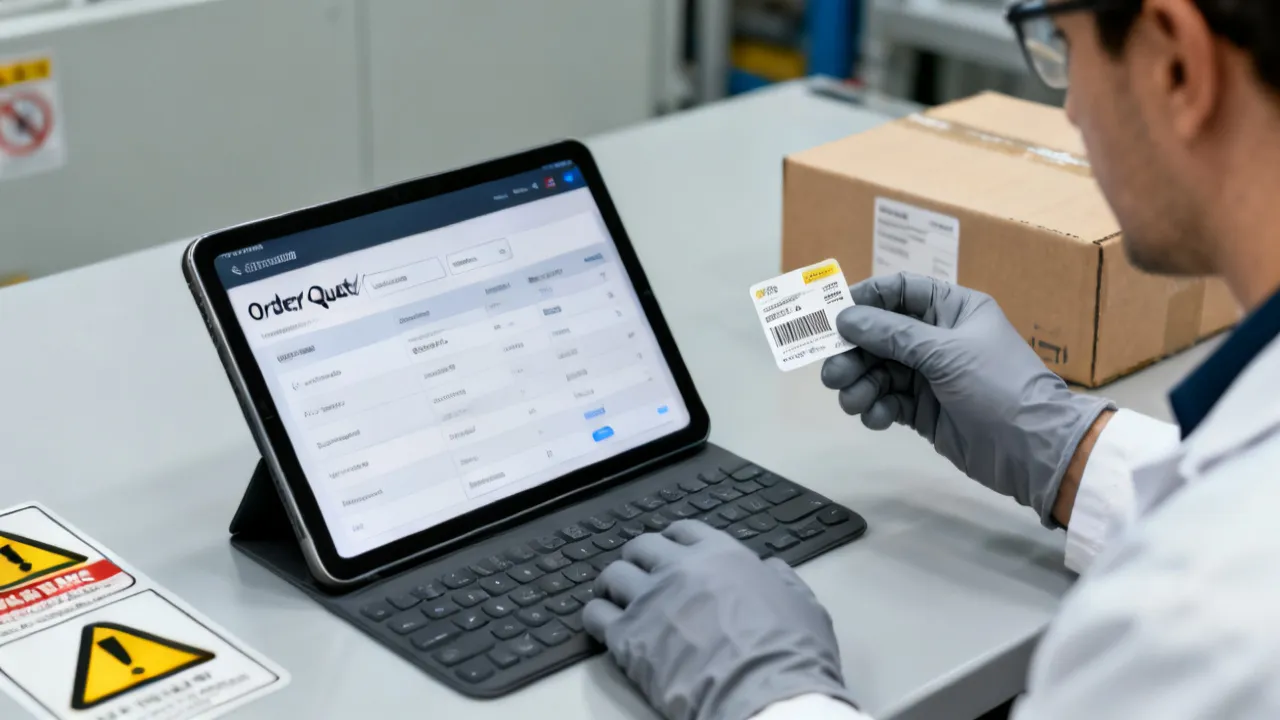
Understanding Price, Supplier, and Listing Identifiers
This guide explains how to interpret listing identifiers like 44539991272 and how to evaluate supplier and pricing signals in procurement workflows. Objectively, these keywords often relate to cataloging, quoting, and verification steps used by sourcing teams. The article outlines decision conditions, compliance checks, and practical FAQs to reduce misquotes and mismatches.

Understanding Xx: Industry Insights and Supplier Guidance
This guide explains Xx and how to evaluate related offerings with supplier and pricing considerations. Objectively, Xx commonly refers to a technical category used across supply chains, where performance depends on specifications, material quality, lead times, and documentation. You’ll find decision conditions, a comparison table, and an expert set of FAQs to support procurement and planning.

Expert Guide to Xxxx Procurement and Pricing
This guide explains Xxxx selection, pricing logic, and supplier comparisons, with a focus on how to evaluate value beyond the sticker price. It provides objective background on the keywords and purchasing considerations, covering requirements, sourcing signals, and risk controls. The goal is to help procurement teams and buyers make consistent, defensible decisions.

...` (≤ 9 words, no year) - `
...` (~450 characters, objective background) - `
Navigating Fygf: Sourcing, Pricing, and Supplier Checks
This guide explains how to approach Fygf with a disciplined sourcing method, focusing on pricing logic and supplier due diligence. Objectively, Fygf is treated here as a procurement-related keyword representing a specific product or service category. Background coverage clarifies how market pricing, lead times, documentation, and quality controls connect—so decisions can be made with confidence.

Procurement, Pricing, and Supplier Planning Essentials
This guide explains how to manage procurement decisions around the long numeric keyword string “822478979788877878878897979797” and related procurement concepts, focusing on objective supplier evaluation, pricing logic, and operational requirements. It provides neutral background context, then delivers an industry-informed framework for sourcing, documentation, risk controls, and FAQ support for procurement teams.
