Altto Vila Madalena offers a distinctive experience in the Vila Madalena area, drawing attention for its setting, lifestyle fit, and visitor-focused planning. This guide provides objective background on the keyword, explains how to evaluate similar venues, and outlines practical decision criteria—so you can assess suitability, timing, and service quality without assumptions.
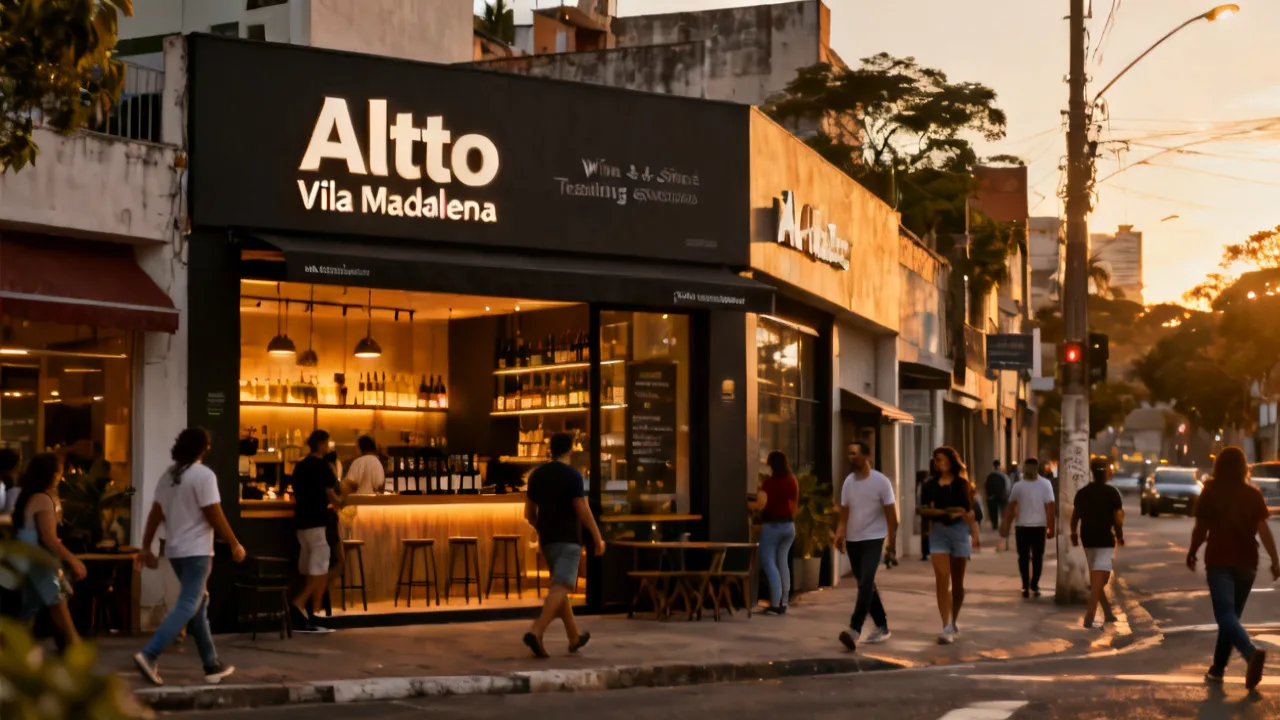
If you’re researching Altto Vila Madalena, treat it as a “fit-and-details” decision: start by verifying what the venue actually offers (experience type, service model, and operating schedule), then compare logistics and guest expectations in the Vila Madalena context. Neighborhood vitality is a real factor here—so your top outcome will depend on how the venue’s concept aligns with your pace, preferences, and arrival plan.
From an industry perspective, the very reliable way to judge places like this is to focus on measurable operational signals: clarity of policies, consistency of customer service, transparency around what’s included, and evidence of how the property manages crowd flow. Rather than relying on assumptions, you can build a checklist that reduces uncertainty before you commit.
In practice, this kind of disciplined evaluation matters more in high-demand neighborhoods, because the environment itself—noise, pedestrian density, and evening foot traffic—amplifies whatever strengths or weaknesses the venue has operationally. A venue that looks great on paper can still disappoint if scheduling is chaotic or if the front-of-house experience is underpowered for peak times. Conversely, a venue that is more modest in marketing can feel surprisingly smooth if it has strong process design and clear guest communication.
So the goal is not to “over-research,” but to research the right things. When your expectations are defined early—what you’re paying for, how you arrive, what happens when you get there, and what “done” looks like—you can enjoy the neighborhood energy without letting avoidable surprises erode the experience.
In many urban travel and lifestyle markets, a name becomes meaningful when it consistently matches the day-to-day experience. With Altto Vila Madalena, the keyword pairing typically signals a venue intended to feel integrated with the neighborhood—especially one known for creativity, culinary variety, and a distinctly local atmosphere. Vila Madalena is widely recognized in São Paulo for its arts scene and street-level energy, which means visitors often choose experiences that feel less “generic” and more “of the area.”
However, neighborhood reputation doesn’t automatically guarantee every specific venue’s quality. A professional assessment should separate the area benefits (walkability, cultural density, venue variety) from the venue execution (staffing, service standards, guest communication, and how well the offering handles peak times).
To understand why the venue attracts attention, it also helps to consider how audiences search and decide in real life. Most visitors do not start by reading long, technical descriptions. They start by scanning for a name that fits the vibe: “Vila Madalena” usually signals art, street culture, and lively evenings; “Altto” (as a branding pattern) tends to suggest something curated or elevated. When those cues align, people feel confident enough to shortlist the venue.
That’s precisely why operational reality matters: the early confidence built by branding must be reinforced by actual guest-facing details. Visitors in Vila Madalena often want a sense of rhythm—curated yet relaxed, stylish but not pretentious, social but not chaotic. The venue’s ability to deliver that balance is where satisfaction is won.
Industry operators know that guest satisfaction is usually influenced by a handful of operational variables. For Altto Vila Madalena—or any comparable venue in a high-demand neighborhood—prioritize the following criteria:
These points are not about hype—they’re about predictable operations. A venue that performs well in these areas tends to deliver a calmer, more consistent experience, even when demand is high.
To apply these criteria well, use them like “tests.” For example, experience clarity is tested by whether the booking page answers basic questions without you needing to message the venue. Service readiness is tested by how quickly staff provide guidance once guests arrive. Capacity and timing are tested by whether the venue staggers arrivals or sessions in a way that reduces crowding at entry points, restrooms, or waiting areas. Guest fit is tested by how guests report their comfort: were they able to converse, did the pacing feel appropriate, and did the venue’s format match the audience.
Local integration is tested by whether the vibe feels intentional. In Vila Madalena, visitors often enjoy design that feels connected to arts culture—whether through music choices, visual style, or the way the experience flows around the neighborhood energy. Even if a venue is “modern,” it can still feel local if it references the local rhythm rather than overriding it.
Ultimately, evaluation should be less about finding a perfect venue and more about confirming that the venue is a good match for you. A venue can be excellent and still be the wrong choice if it’s built for a different pacing or guest profile.
Vila Madalena’s appeal often comes from its blend of street culture and lifestyle-oriented spending. Visitors frequently describe the neighborhood using terms like “artsy,” “lively,” and “distinctly local,” and those impressions can shape expectations. People arrive wanting a sense of place: tasteful ambience, neighborhood-appropriate music or design, and service that feels attuned to a relaxed but curated environment.
For Altto Vila Madalena, the key question becomes: does it match those expectations in practice? The venue’s physical layout and staff flow matter, particularly on evenings when foot traffic is higher. If you’re planning around a specific day (weekend vs weekday), treat it as a variable in your assessment—busy nights can affect waiting times, sound levels, and how quickly staff can respond.
In a neighborhood like Vila Madalena, “expectations” are more than aesthetic preferences; they often involve how guests want time to feel. Some people want a slow, conversation-friendly visit with flexible pacing. Others want a structured experience that moves at a confident tempo. The venue’s format—timed sessions, guided flow, open mingling, or shared communal setups—determines which expectation you’ll experience.
There are also practical expectations that travelers and locals hold. Many visitors expect easy arrival and clear signage, because Vila Madalena streets can be busy and parking or pickup can be unpredictable. Others expect that if the venue is popular, staff will manage entry efficiently and provide guidance before guests get frustrated.
When expectations meet reality, guests leave with the feeling that the venue “understands the neighborhood.” When reality diverges, dissatisfaction can appear quickly even if the venue has good product, because operations affect comfort and confidence.
As an industry expert would advise, you should focus on signals that are harder to fake and easier to verify:
Where possible, prioritize information that can be cross-referenced—rather than relying on a single posting or an unverified account. This reduces the risk of planning based on incomplete expectations.
To expand your operational checking, consider a few additional “signal categories” that tend to correlate strongly with guest outcomes in live venues:
These signals don’t require you to have insider access. They emerge from review patterns, official policy text, and the way the venue answers questions when contacted before a booking.
Also consider how reviews are written. A single glowing review isn’t enough, and a single negative review isn’t either. But consistent themes—especially around communication clarity, entry timing, and staff helpfulness—often show operational maturity.
Because Additional important Information was not provided, the following supplement is structured as a general decision framework you can apply to Altto Vila Madalena and similar venues in Vila Madalena. Use it as a practical guide to confirm fit and requirements without assuming details.
| Decision Area | What to Compare | Why It Matters | Conditions / Requirements to Verify |
|---|---|---|---|
| What’s included | Experience type, tastings/food format, duration, add-ons | Determines true value and time commitment | Confirm any minimum booking size, age limits, and what’s optional vs included |
| Pricing structure | Per-person vs package pricing, seasonal differences, service fees | Helps you plan a realistic budget | Verify whether pricing changes by date/time and whether taxes/service are included |
| Availability | Booking windows, walk-in policy, peak-day constraints | Reduces last-minute friction | Check whether reservation is required and how early you should secure a slot |
| Service standards | Staff-to-guest ratio cues, guidance quality, complaint handling | Impacts comfort and satisfaction | Look for policy clarity on refunds, reschedules, and accessibility needs |
| Location logistics nearby | Transit access, walking routes, late-night entry practicality | Neighborhood energy can affect arrival experience | Verify entry timing, pickup/drop-off expectations, and safe arrival guidance |
| Guest fit | Noise level, pacing, dress expectations, group suitability | Ensures expectations match atmosphere | Confirm any dress or behavior expectations, plus rules for large groups |
To make this table work even better in real decision-making, assign yourself a “confidence target.” For example, you can set a threshold such as: you want at least 80–90% clarity on inclusions, and you want a clear rule for check-in timing. If you can’t reach that level of clarity before paying, you should delay booking or contact the venue for specifics.
This is especially important in contexts like Vila Madalena where people often travel without knowing the micro-layout of the streets. Even if the venue experience is excellent, unclear logistics can reduce satisfaction. A simple confirmation of entry point and arrival window can prevent a disproportionate amount of stress.
When you run this process, try to capture your answers in a small personal checklist. That way, you can compare Altto Vila Madalena with other options nearby without relying on memory or mood. Many visitors regret not writing down key rules (like late arrival policy, cancellation windows, or what the experience actually includes) because they later discover those details differ across venues.
You can also strengthen the guide by adding “scenario questions.” For example: What happens if you arrive 15 minutes late? What happens if your group is uneven—one person arrives earlier than the rest? What happens if you have dietary restrictions? What happens if the session is delayed? Asking these questions early (or finding answers in policy text) helps you avoid the most common sources of frustration in timed experiences.
Another scenario is language and communication. In São Paulo, some venues cater to international visitors; some do not. Even if communication is fine, you want to know whether the experience will be easy to understand—especially if instructions are important to the format.
When you consult information about venues in São Paulo’s popular districts, use the following types of sources as higher-quality references:
For broader understanding of how consumer experiences are shaped by service operations, hospitality research published by organizations such as the International Journal of Hospitality Management and methodology discussions from UNWTO can provide useful frameworks. For operational and tourism context in Brazil and urban tourism planning, materials from IBGE may help for general demographic or mobility context, though venue-specific claims should always be verified directly.
To avoid overreliance, remember that each source has strengths and limitations:
A good approach is triage: treat official policy and booking terms as your foundation, then use reviews to test whether the venue executes those policies well. If you find a mismatch—policy says one thing, guest outcomes suggest another—prioritize the evidence that impacts your day-of experience.
Also consider the date of sources. In dynamic nightlife or concept venues, operations can change: staff turnover, upgraded service procedures, revised menus, or new reservation systems. A review written many months ago can still be useful, but you should weight more recent signals more heavily.
You asked for “price information” and “supplier details,” but no concrete numeric price figures or named supplier data were included. In a responsible guide, the right approach is to explain how guests should verify price and supplier-related claims without inventing or guessing numbers.
In practice, Altto Vila Madalena (like many curated neighborhood venues) may use pricing based on format—such as per-person selections, package-based experiences, or time-based differences. The supplier side—whether ingredients, beverages, or experience partners—should be evaluated by looking for specificity. If a venue describes collaborations or sourcing, the top proof is not broad marketing language, but clear identification and consistent guest-facing outcomes.
Condition/requirement to apply: before confirming a booking, check that the venue’s published pricing clearly states what’s included, and verify whether supplier claims (for example, sourcing or partner brands) are directly referenced or only implied.
To go beyond this baseline, you can apply “supplier verification logic.” For example, if a venue claims it uses a particular ingredient category (like specialty coffee, regional produce, or a named beverage brand), professional guests look for one of these forms of evidence:
Without such evidence, you should treat supplier claims as “marketing intent” rather than guaranteed content. That doesn’t mean the experience is bad—it simply means you’re making a decision with the correct level of certainty.
On the pricing side, professional guests also look for hidden-cost traps. Common examples include service fees, booking fees, or add-ons that are presented at checkout rather than in the original offer. Another example is a “minimum spend” requirement for groups. If these are not visible upfront, the experience can feel more expensive than expected.
Because Vila Madalena is a lively district, some venues also adjust pricing by day or by time to manage demand. A venue might charge more on weekends when demand is highest. In that case, you can consider shifting your visit to a lower-demand day if your goal is value rather than exclusivity.
If you want to be extra systematic, compare:
This helps you avoid the mistake of comparing headline prices between different formats. Two offers can have similar total cost but different value because one includes more items or more time. Or two offers can have different pricing but the same “core” components; the difference might simply be in the add-ons.
Very important: Your visit to Altto Vila Madalena should be guided by verifiable details: clear inclusions, transparent pricing structure, and confirmed requirements for booking and entry. Secondary: Vila Madalena’s energetic atmosphere affects arrival timing, noise levels, and pacing. Supporting: Additional perceptions—design style, vibe, or neighborhood integration—are meaningful only after you’ve confirmed the operational foundations.
This inverted pyramid approach reduces regret. Many travelers feel they chose “wrong” because the vibe didn’t match their expectations. But often the deeper issue is that the operational foundation was unclear: the format wasn’t what they thought, the session started earlier than expected, or entry rules created friction. When decision facts are confirmed, your mood and expectations become aligned with what the venue will actually deliver.
For Altto Vila Madalena, the operational “foundation” usually includes:
Only after these elements are clear should you anchor your expectations about style and atmosphere.
Altto Vila Madalena is referenced as a venue associated with the Vila Madalena area. To understand the specific offering, confirm the experience type (format, duration, inclusions) through the venue’s official booking or policy information.
If you’re comparing multiple venues in Vila Madalena, try to confirm whether “Altto” refers to a single flagship space, a concept that runs certain experiences at different times, or a venue that collaborates with rotating partners. These distinctions can affect what you will experience on your specific date.
Look for a breakdown that specifies whether service charges and taxes are included, and whether pricing varies by day or time. If the venue offers package options, compare what each option includes rather than comparing only the headline cost.
To avoid surprises, check three layers: (1) the price shown, (2) the price at checkout, and (3) the rules that explain what happens if you change plans. Surprise costs often appear when a guest later learns about service fees or add-on requirements that were not clearly described in the original offer.
Also watch for the “minimum booking” pattern. Some venues might require a minimum party size to start certain packages. If you’re traveling as a couple or solo, confirm that you won’t be charged extra or forced into an unfamiliar group arrangement.
That depends on the venue’s operating model. In high-demand neighborhoods like Vila Madalena, many curated experiences require reservations or at least a defined arrival window. Verify the current policy before planning your trip.
If you’re unsure whether reservations are mandatory, check for signals like “limited capacity” language, timed session descriptions, or “arrive within X minutes” rules. When venues use timed sessions, they frequently allocate inventory (food, guided staff attention, or table availability) and expect strict timing adherence.
In practice, it’s often safer to reserve in Vila Madalena on weekends. If you’re traveling with a group, a reservation also helps reduce the risk that you arrive together but are separated into different time slots.
Typical requirements include age restrictions, cancellation or rescheduling terms, and any guidelines related to group size or accessibility needs. Check these policies directly for the very current conditions.
In addition to the common requirements, also verify practical rules that impact comfort:
Even if the venue doesn’t emphasize these rules, many issues can be prevented simply by asking.
Suitability depends on the venue’s pacing and service model. Review whether the experience is structured around timed sessions, shared tables, guided formats, or open mixing—these details determine whether group conversations or couple-style pacing will be comfortable.
To evaluate group suitability specifically, look for details such as:
For couple suitability, consider whether the experience emphasizes table service and intimate pacing or whether it’s more of a social mixing format. Couples often prefer clarity on seating arrangements—do you get a private table, or do you share space with other guests?
Vila Madalena’s lively character can influence arrival and evening ambience. On busier nights, sound levels, crowd density, and waiting times may differ from quieter periods. Plan timing with your comfort preferences in mind.
It can also affect your pre-visit and post-visit flow. Many visitors in Vila Madalena build their evening around a sequence: walking, a drink somewhere casual, then the curated experience. If you plan to do that, check whether the venue requires you to arrive at a strict time. If the curated experience is timed, you might need to shorten the earlier stops.
Additionally, consider weather. Outdoor walkability is part of Vila Madalena’s appeal, but rain can change everything about arrival comfort. A venue with good entry logistics—covered entry points, clear signage, and staff greeting—will soften those conditions.
Contact the venue directly and ask how they support accessibility needs, arrival procedures, and any constraints related to seating or movement. The very reliable answer is the venue’s current policy.
When you reach out, ask specific, operational questions rather than general ones. Examples include:
If you have dietary restrictions, ask about ingredient transparency and whether substitutions are possible. If the experience is structured around specific courses, you need to know whether substitutes follow the same schedule or if they extend the session.
If the venue mentions partner brands or sourcing, look for specifics and consistency across official descriptions and guest outcomes. Avoid assuming that marketing terms alone indicate what you’ll receive; confirm through details stated in booking pages or official communications.
In responsible guest decision-making, you can treat sourcing claims as “promises” only when they are detailed and repeated in official materials. If a venue simply implies sourcing (for example, saying “we use local ingredients” without naming categories or demonstrating consistency), your certainty should remain moderate. You can still book, but you should not interpret ambiguous language as guaranteed sourcing you personally care about.
If the supplier detail matters to you—such as a specific beverage brand, a named producer, or a dietary ingredient category—ask directly. A transparent venue can typically answer questions clearly, because supplier details are part of operational planning.
While you can’t eliminate uncertainty entirely—especially in dynamic neighborhoods—you can significantly reduce it by planning with the local rhythm in mind:
To make these tips more actionable, consider adding a short “evening schedule” to your planning. For example:
Also think about how you’ll navigate transportation. In a lively neighborhood, last-minute ride-hailing pickup can be slower if the street is crowded. If you’re driving, confirm whether parking is available and whether there are any constraints near the venue entrance.
If you’re walking from a nearby metro or transport stop, consider how much distance you’re comfortable with. The venue might be close on a map, but in practice the walking route through busy streets and intersections can add time. Your comfort matters more than “distance on paper.”
And if you’re attending as part of a group, assign a single person as the “logistics coordinator” for arrival and check-in. This reduces confusion and helps prevent the common group problem: arriving at the entrance separately without knowing the correct check-in flow.
To evaluate Altto Vila Madalena responsibly, focus less on impressions and more on the operational reality: inclusions, transparent pricing, booking conditions, and how the venue handles guest flow in a lively Vila Madalena setting. With a clear checklist and verified requirements, you can make a decision that matches your preferences—whether you want a curated outing, a neighborhood-forward evening, or a structured experience with predictable service.
If you share the specific offering type you’re considering (for example, tasting format, event style, or package), I can tailor the comparison criteria and FAQs even further to match that exact experience.
A Guide to Cost-Efficient Small Electric Cars for Seniors

Mastering Debt Consolidation: Boost Your Credit Score and Manage Interest Rates

Your Guide to Loans, Credit Checks, and Interest Rates

Affordable Independent Living: Finding the Right Senior Housing

Guide to Senior Living Apartments: Affordable and Comfortable Environments

Leasing a Car: Expert Tips for Your Next Vehicle

Maintaining Oral Health After Tooth Loss with Dental Implants

Maintaining Oral Health with Dental Implants for the Elderly

Altto Vila Madalena: What to Expect Nearby
Altto Vila Madalena: What to Expect Nearby
Altto Vila Madalena offers a distinctive experience in the Vila Madalena area, drawing attention for its setting, lifestyle fit, and visitor-focused planning. This guide provides objective background on the keyword, explains how to evaluate similar venues, and outlines practical decision criteria—so you can assess suitability, timing, and service quality without assumptions.
A Practical Guide to Vila Madalena Experiences
This guide maps how to plan a thoughtful visit and day-use experience in Vila Madalena, with an objective look at local context, purchasing considerations, and supplier/price factors. Vila Madalena is known for design, street culture, and curated neighborhood commerce. Readers will learn how to evaluate options, compare offerings, and set realistic expectations for quality and fit.
Você Vila Madalena: Expert Guide to Smart Local Choices
This guide explains how to evaluate options in Você Vila Madalena with an expert, practical approach. It provides objective background on the neighborhood context and what people typically compare when choosing local services, covering quality signals, supplier considerations, and decision conditions—without relying on hype or unverified claims.
Você Vila Madalena: Neighborhood Guide for Visitors
Você Vila Madalena helps travelers plan a smarter visit to Vila Madalena in São Paulo, focusing on what to look for, how to evaluate options, and how to navigate the neighborhood responsibly. Objectively, the term “Você Vila Madalena” functions as a local, place-based phrase that points people toward area-specific services, experiences, and practical orientation in one of the city’s very distinctive districts.

Vila Madalena Guide for Buyers and Visitors
This guide explains what to expect when exploring Vila Madalena, focusing on how to evaluate offerings, understand typical pricing logic, and choose reliable suppliers. It also provides objective background on the neighborhood’s cultural identity and the buyer-supplier workflow. Finally, readers get clear conditions, requirements, and practical FAQs for smoother decisions.
Vila Madalena Guide for Local Services and Suppliers
This guide explains how to evaluate local services and suppliers around Vila Madalena with an objective, buyer-focused approach. It provides background on the area’s market character, the common reasons people source locally, and what typically influences pricing. Readers also get a practical comparison framework, clear conditions, and FAQs.
